Part 1: Olympic Peninsula - Olympic National Park
Our first adventure was in the protected Freshwater Bay, which, ironically, is not freshwater, but the early explorers did find a freshwater creek nearby. Thus, the name.
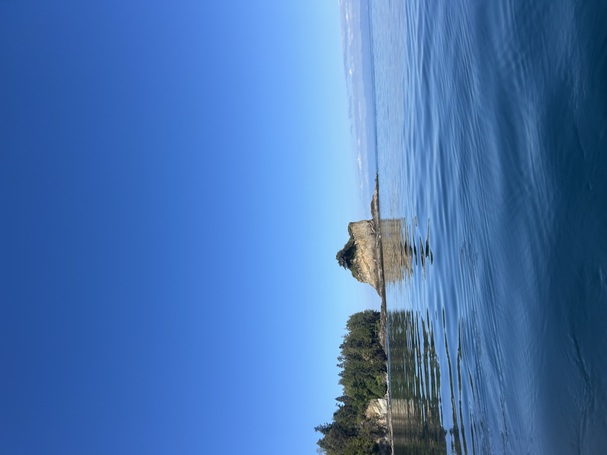
Elevate Outdoors provided the sea kayaks and gear, and our guide, Nina, headed out to the prominent sea stack, Bachelor Rock. We stopped near the rock, and Nina took her paddle and scooped up some bull kelp. She said Try some, you will like it, plus it is extremely nutritious. I tried it and really enjoyed it. In fact, local naturalist/educator McClellan “Mac” Smith has developed many recipes, such as Mac’s Sea Lettuce Salad and his famous Mac’s Sea Cheetos (recipes below). After the brief culinary discussion, we headed through the Strait of Juan de Fuca.
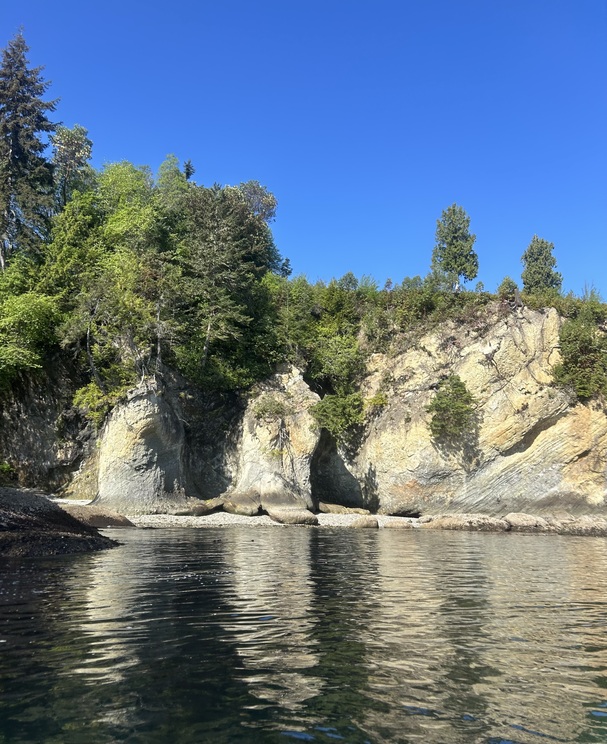
Nina found this protected cove, and we discovered more seaweed and so much wildlife. Sea stars, oysters, and we even saw a black oyster-catcher, grabbing a sea urchin. By the end of the day, we counted 18 different birds and fish. We later found out that Nina’s degree is in biology, and when she is not guiding, she leads hiking and backpacking trips in Olympic National Park with her company, Magic Forest Tours.
We continued kayaking, finding more coves to explore and just enjoying the beauty of the ocean, the warm sun, and the light breeze. We finished kayaking for the day, loaded the kayaks, and returned a short distance to Elevate Outdoors' home base in Port Angeles. We chatted with Lori Smith, one of the owners. Lori’s love is any water-related activity, and she insisted that the next day we go on one of her favorite kayaking outings, Lake Crescent, located in Olympic National Park. Nate Smith is her husband, and his favorite is biking, so he leads those tours.
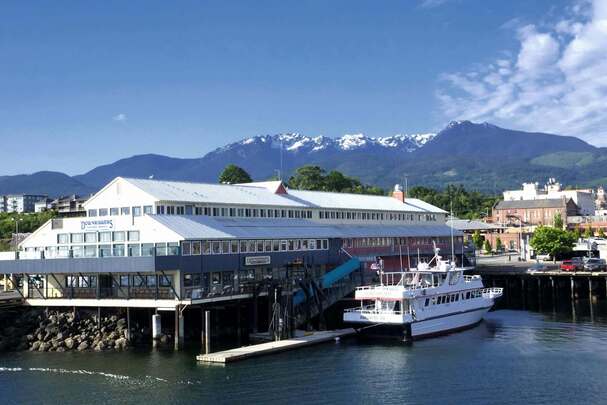
We were ready to relax and eat and wanted to continue enjoying the scenery of the Strait of Juan de Fuca and the Salish Sea. Downriggers Restaurant was the ticket for this – wonderful view and terrific seafood and beverages. After dinner, we went for a walk on the Olympic Discovery Trail. We strolled along the waterfront, enjoying the view on the paved path designated for non-motorized exploration. The eastern terminus begins in Port Townsend and extends roughly 135 miles west to La Push at the Pacific Ocean.
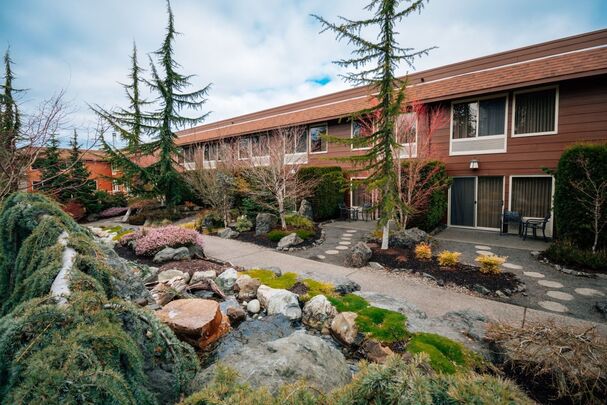
Needing to recharge for another day of kayaking and hiking, the Olympic Lodge by Ayres, in Port Angeles, was an excellent choice. Many of the rooms have an outside patio and stunning manicured gardens. In fact, there is lots of greenery surrounding you, as there is a golf course adjacent to the property.
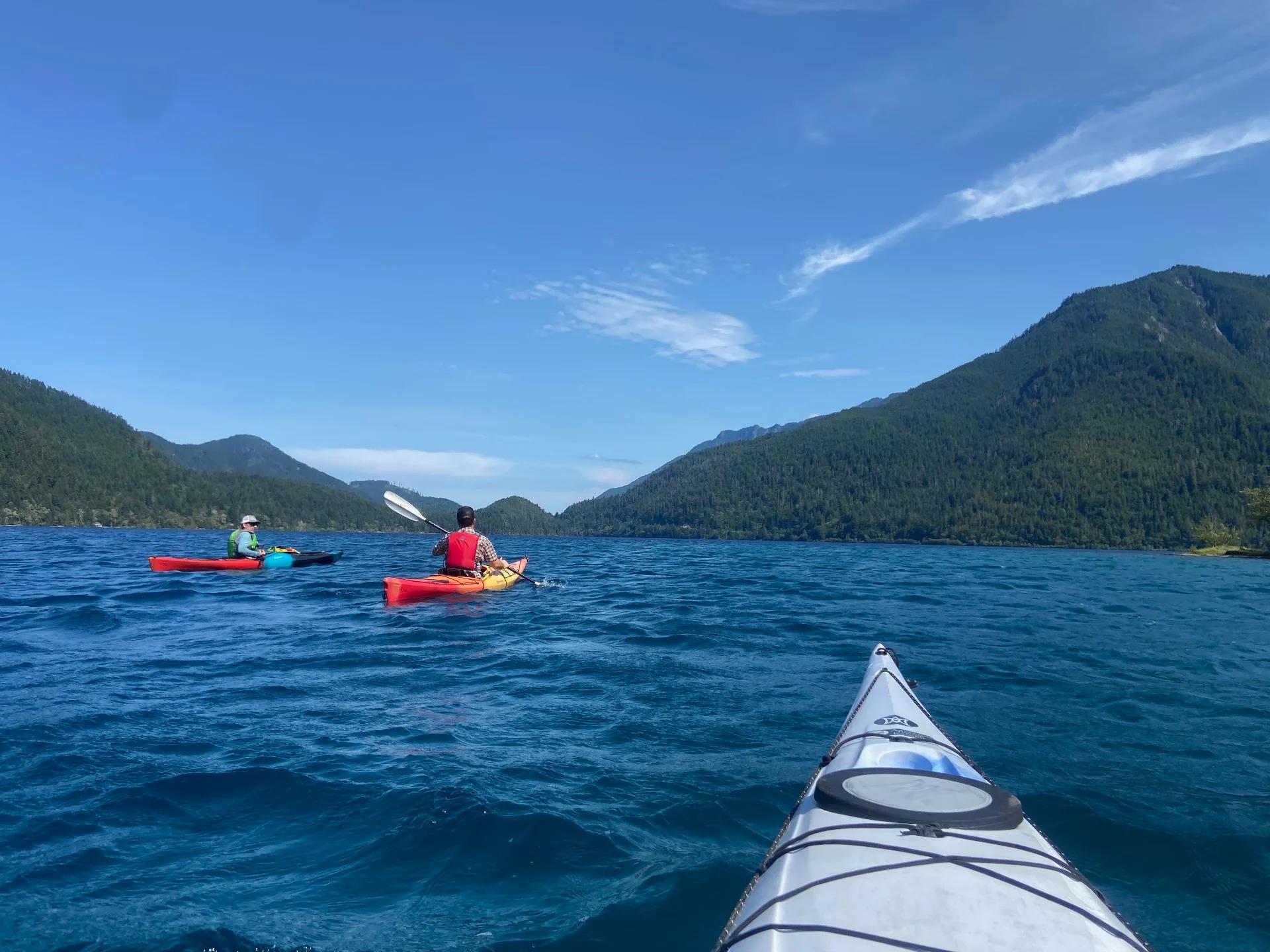
The next morning, we enjoyed their complimentary breakfast and returned to Elevate Outdoors to pick up the kayaks and our guide, Nina. We headed to Lake Crescent to launch the kayaks. Another great day of exploring, which included exploring part of the 33 miles of shoreline. The scenery is difficult to capture in words, from the crystal-clear lake—600 feet deep—to the snowcapped peaks rising above its forested shoreline. Above us, we noticed a paved trail and found out it is the Spruce Railroad Trail. Much of the trail is along the shoreline and runs for about five miles.
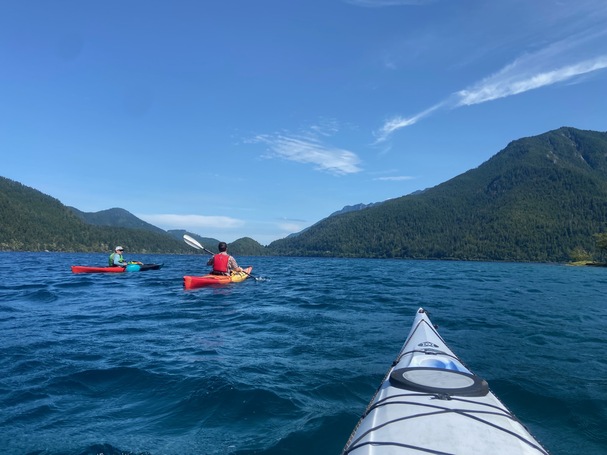
One reason for the crystal-clear nature of the lake is that no major streams flow into it, just tiny, clear streams. The lake is very cold even in the summer. In the deep parts, many say it can barely be 50 degrees. We were not interested in doing a cold plunge and returned to the shoreline. After we finished paddling, we decided to explore more of Olympic National Park.
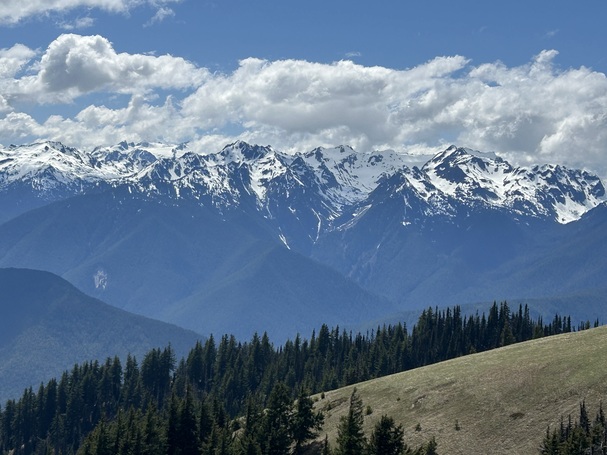
Since it was such a beautiful day, we decided to drive up to Hurricane Ridge. The less-than-an-hour drive took us a mile high with incredible views. Facing south is the always snowcapped Mount Olympus, and just to the right is the snowcapped peak of Mount Carrie. How about views of the Strait of Juan de Fuca? Turn around and face north; you will see Vancouver Island. Insider tip: Get lucky and pick a day that has good visibility.
The next day, before heading home to the Seattle area, we enjoyed a delicious breakfast at Chestnut Cottage in Port Angeles. We had their eggs with locally sourced country sausage. It was a delicious breakfast in a very picturesque restaurant.
Continuing home, we drove a short distance through the town of Sequim and, 10 minutes later, stopped at 7 Cedars Resorts. The resort is owned and operated by the Jamestown S’Klallam Tribe. S’Klallam, which means “strong people,” is the name of a Salish tribe. There are also the Lower Elwha S’Klallam Tribe and the Port Gamble S’Klallam Tribe.
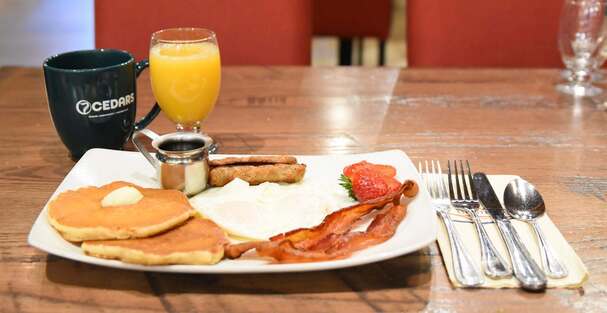
In 1874, the tribe pooled $500 in gold coins and purchased the 210 acres along the Strait of Juan de Fuca, now called Jamestown (slightly north of 7 Cedars). That was a shrewd investment! 7 Cedars Resort has five restaurants to choose from, along with a first-class hotel, casino, golf course, and many other amenities.
This was the first of three kayak tours in the Salish Sea. Read Part 2 here!
Mac’s Sea Lettuce Salad
Courtesy of McClellan “Mac” Smith
Ingredients:
1 cup of fresh live sea lettuce (Ulva, Enteromorpha, or Monostroma; the more delicate the better), rinse in fresh water briefly
1 cup of sweet onions (red, Georgia, Vidalia, Maui, Walla Walla, etc)
1 cup heavy cream, yogurt, or sour cream
3-4 tbsp of organic brown rice vinegar (unseasoned)
3-4 tbsp of organic olive oil or other good oil
Juice of 3 lemons or limes
A pinch of cayenne
Directions:
For the salad, chop the sea lettuce and onions finely, and toss together. For dressing, blend cream or yogurt, vinegar, oil, citrus juice, and cayenne until thoroughly mixed. Toss with salad and serve.
Mac’s Sea Cheetos
“One day, while lying on the beach, I opened my eyes and spotted a perfectly dry fucus bulb rolling slowly by in the dry sunny air. I picked up that light, airy, floating parcel and took a bite…it tasted like a toasted snack, and the inside was reminiscent of a Cheeto. I imagined it having a cheese flavor, and the Sea Cheeto was born.” McLellan Smith
Ingredients:
6 to 8 cups fresh-picked Fucus (Rockweed) bladders (the part of the Fucus which is full of the gel, not the flat parts)
1 pkg of white cheddar cheese mix from a box of Annie's Organic Macaroni and Cheese (her brand is the best).
Directions:
Preheat oven to 200 degrees. Distribute the Fucus bladders loosely over several cookie sheets (you may have to cook the bladders in a few separate batches).
Place the cookie sheets in the oven, and prop open the door of the oven with a spoon or other object to let the moisture escape as the bladders dry. Occasionally check and turn the bladders as they dry.
About halfway through, sprinkle the cheese powder on the bladders. When totally dry and crispy, they are ready to serve and can be placed in a ziplock bag to save for later.
Click here for more information about Bull Kelp and recipes for Bull Kelp Pickles and Bull Kelp Dolmas.
Editorial disclosure: lodging, food, and beverages were generously provided.
Photo credits: Port Angeles Wharf (image 3), Olympic Lodge by Ayres (image 4), Elevate Outdoors (image 5), 7 Cedars Resorts (image 7).