About This Food
Information
Physical Description
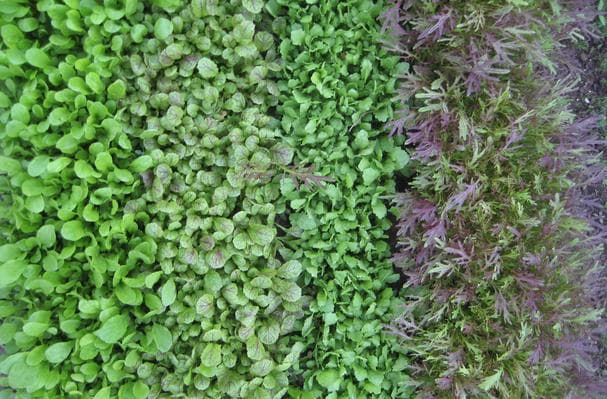
Microgreens are tender lettuce and mustard greens that are chopped off young, usually when they are only an inch or so high at the most and barely a few weeks old. They’re smaller and younger than baby greens, which tend to be harvested later when the plants have grown a good three inches tall or more.
Tasting Notes
Selecting and Buying
Preparation and Use
Conserving and Storing
When the greens are first brought home, any rubber banding or ties should be removed to avoid damage. The damaged, discolored or wilted greens should be thrown away. The greens can be stored washed or unwashed, but they must be dried properly before storing. Once the greens have been dried properly, wrap small batches in dry paper towels and place in a resealable plastic bag. Do not overpack the greens so they will have room to spread out. Then gently press the air out of the bag and seal it. The paper towel will help to absorb moisture that may still be on the greens. Exposure to excess moisture and air will cause the greens to deteriorate quicker. After the air is removed and the bag is sealed, place it in the refrigerator crisper. The greens can be stored anywhere from 3 days to a week, depending on the type of green. Some of the delicate greens, such as mache, can only be stored for a day or two. It is best to buy the more delicate greens just before you are going to use them to ensure freshness. Greens sold with the roots still attached should be searched for insects and then the roots should be wrapped in damp paper towel. Place the bunch with wrapped roots in to a plastic bag or place the wrapped roots in a glass and cover with a plastic bag. Do not store greens next to ethylene gas producing fruits, such as apples and bananas. The ethylene gas they produce will cause premature ripening and the leaves will become spotted and they will begin to decay. It is best to store all greens for the shortest time possible to ensure freshness.