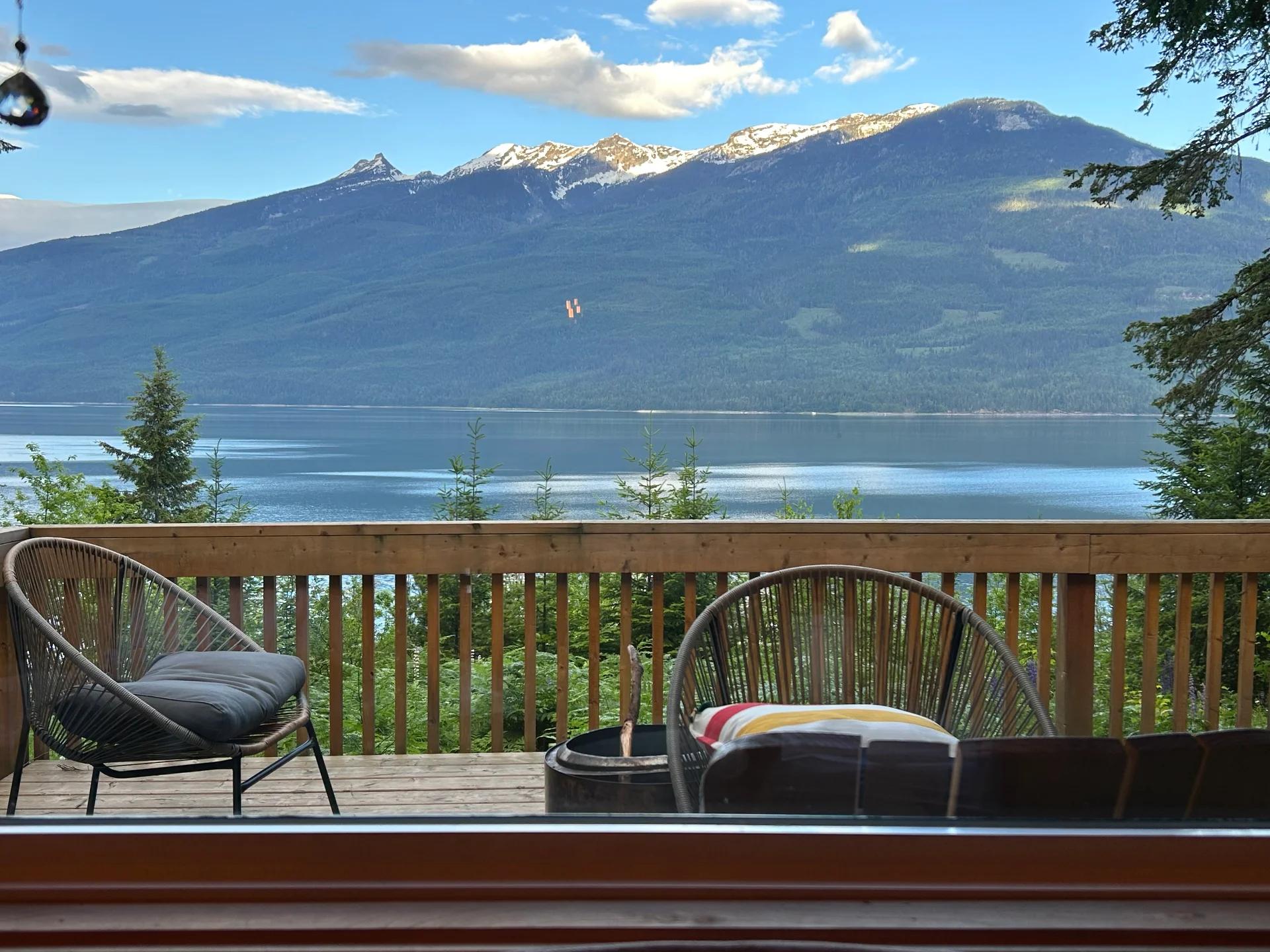
Part 1: Upper Arrow Lake
Rugged peaks, pristine mountain lakes, and the winding Columbia River define the Kootenay Rockies of southeastern Canada. Framed by the Canadian Rockies and the Columbia Mountains, this region offers dramatic landscapes and a powerful sense of place.
In this three-part road trip series, we explore this remarkable area while reflecting on past transgressions—and the efforts now underway to address them.
Kayaking
At Kootenay Lakeview Retreat, sweeping mountain and lake views were never more than a glance away. After lingering over morning coffee and watching the light drift across the water and peaks, we headed out for a custom kayaking tour. We walked a short distance to meet Naomi McKay, known as one of the Kootenay Legends.
The first order of business was to choose a kayak from her fleet. However, she indicated that she would be on the custom cedar-strip kayak she built with help from some experts. Nanoq (Inuit word meaning polar bear) is a popular sea kayak design by Björn Thomasson.
This three-hour tour was a picturesque journey with a certified sea kayak guide with 30 years of experience in the Northwest. She was born and raised in Nakusp in a family that had come to the region in 1929. So, this trip was steeped in history. When we first launched, I looked towards the southwest and saw the snow-capped Saddle Mountain towering at 7559 feet. She mentioned that if one is ambitious, there is a hike to the old fire lookout.
We paddled north towards the city and enjoyed this tiny island lined with lupine, called Lupine Island by the locals. We paddled past the Leland Hotel, which was built in 1892 and is said to be the oldest continuously operating hotel in BC.
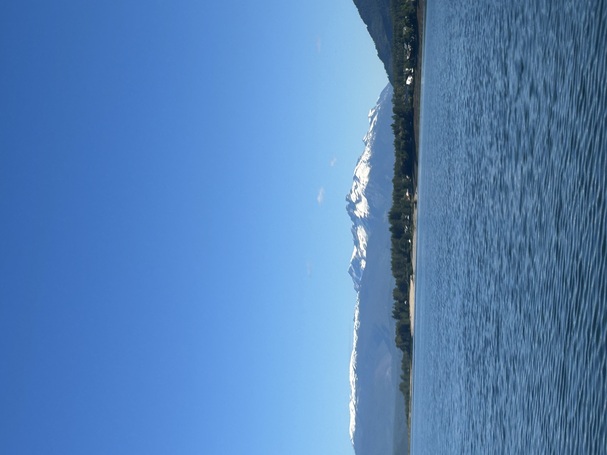
I asked about the Upper and Lower Arrow Lakes and learned about an interesting and complicated history. The lakes used to be separate but were connected by the narrows. However, the Upper and Lower Arrow Lakes were flooded in 1968 after the construction of the Hugh L. Keenleyside Dam. During the summer, the mountain snowmelt causes the two lakes to become one, which is called Arrow Lakes Reservoir. Then, during the winter, the water levels are lower, and the lakes return to the original footprint of Upper Arrow and Lower Arrow Lakes.
As a result of the flooding in the 1960s, over 2,000 people were displaced from communities on the shores of the Arrow Lakes. Prime farming land was also eliminated, and many lost a self-sufficient way of life. Some of the inhabitants of these small communities moved to larger towns in the area, and some moved away, destroying family and community connections. Naomi offers personalized kayak guiding for individuals and small groups on the Arrow Lakes. Highly recommended!
Hot Springs
We had two hot springs to visit, the first being Nakusp Hot Springs, where we met Karla Kuharic of Alpenglow Mountain Escapes. Karla has a diverse range of guiding experience, including Polar Bear expeditions in the Arctic and Grizzly Bear viewing tours. Today was a much more relaxing day of forest bathing, using the Japanese process known as Shinrin-Yoku. The forest surrounding the hot springs are a perfect location for mellow hiking and Karla’s guided meditations that immerse our senses in the forest experience.
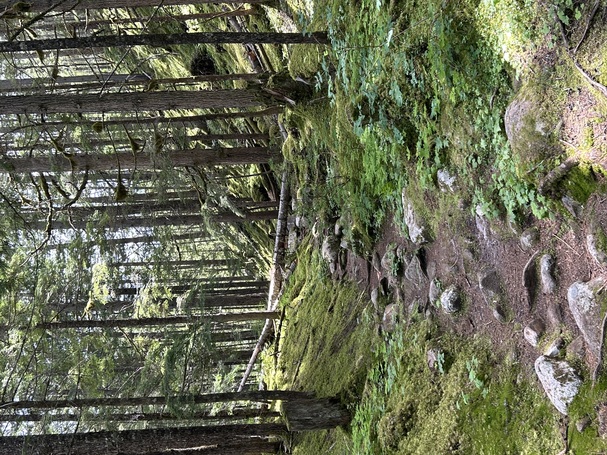
We hiked near the Kuskanax Creek through the Kuskanax Valley, which is part of British Columbia's Interior Rainforest. In June, the Kuskanax Creek is a roaring creek with some outstanding waterfalls because of the snowmelt from the Selkirk Mountains.
Karla led us to various areas and had us sit on the soft carpet bed of the forest and observe what we could smell, feel, hear, and see. As a group, we discussed our experience during the traditional tea service at the conclusion of the experience.

Our next Hot Springs experience was Halcyon Hot Springs Resort, only 30 minutes to the north. While we soaked in the mineral springs, we enjoyed the stunning views of the Monashee Mountains. Centuries before the Europeans ventured this far west, the Sinixt First Nations were aware of the healing and therapeutic qualities of lithium-laden waters. In 1890, Captain Robert Sanderson located the source of the springs and built the first hotel, equipped with a series of wooden “plunges” where guests could soak in the superheated water. Later, this water was bottled and shipped to many destinations for others to enjoy. The hotel changed hands and was enlarged. The new owners added gambling to the resort. The resort became a popular destination for both the wealthy and the working class.
1924 to 1955 was a very interesting time when Brigadier General Dr. Frederick William Elias Burnham ran it as a world-renowned health sanatorium. He banned smoking, gambling, and alcohol, and even banned bathing suits since he thought that interfered with the healing ability of the lithium. There were separate pools for males and females.
Every effort was made to make this affordable, so there were no price increases. Sadly, in 1955, Burnham was killed in a fire that destroyed the hotel. He and his wife (who had died the year before) are both buried on the property. The big mountain that you see is called Mt. Burnham. The current resort was rebuilt in 1988.
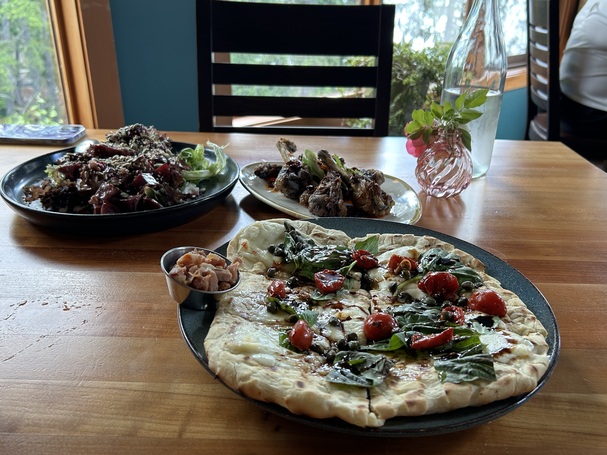
After soaking in the pool and soaking up some sun, we went upstairs for some beverages and excellent cuisine at the Chantrelle Restaurant and Bar. We stuck to the “Small Bites” menu and really enjoyed several dishes. The Mediterranean flatbread was made on a grilled sourdough crust with sun-dried cherry tomatoes, prosciutto, pine nuts, fresh basil, and balsamic reduction. It was delicious with lots of amazing flavors. The Duck Wings were drumsticks, cooked in a maple chili sauce that had a nice kick. We also loved the Beet Salad with whipped goat cheese, red onions, dried cranberries, and a balsamic vinaigrette. It was a memorable dinner!

The Many Restaurants and Beverage Choices!
We returned to Kootenay Lakeview Retreat to enjoy the evening on the patio and reflect on the wonderful day.
The next day, we explored and grazed at some of the many places to eat in this quaint mountain town. At Hoss and Jill’s Bristo, I really enjoyed the breakfast burrito. We had dinner at the Arrow Lake Tavern, which had a great beer selection and a menu of pub food. We also stopped at Mountain Top Coffee to recharge with coffee and some treats. These are just a few of the restaurants and cafes in town.
The highlight was checking out Mountain Top’s new neighbor, Nakusp Brewing Co. They just opened at the end of June after two years of permitting and many hours of building. The brewery is the result of the dedication of three owners, a teacher, a doctor, and a nurse, who are all passionate craft beer drinkers. The teacher is Keith Greenhalf, the doctor is Craig Courchesne, and the nurse is Craig’s wife, Rachel, a retired nurse. Rachel is now the manager of the brewery while Keith is the Brewmeister. Interesting connection: Keith and Craig originally met while volunteering for the Nakusp and District Volunteer Fire Department. They keep busy!
The trio kept waiting for someone to open a brew pub in Nakusp, and when no one did, they finally got to work! It’s a beautiful building with a lovely outdoor patio and a cozy interior with beautiful mountain views. Much of the construction was done by Keith and Craig.
We were served a flight of four beers, all excellent. My favorite (and Keith’s) was the Brewer’s Mark, which is a lower-IBU Citra IPA, and Elizabeth enjoyed the hardier Nitro Espresso, a robust stout with a hint of espresso. An unusual flavor in Thorn to be Wild is blackberry – this smooth, light-bodied blond ale was delicious and refreshing. The other beer we tasted is called Just Beer, a clean, crisp Kölsch.
These three days in Nakusp quickly came to an end, and our next stop was to the south into the Slocan Valley to check out the Japanese Canadian Legacy Trail. Read Part 2 of our trip here!
Editorial disclosure: lodging, food, and beverages were generously provided.