Part 2: Japanese Canadian Legacy Trail – Echoes From the Past (Read Part 1 here)
Driving through the Slocan area in British Columbia is an experience for all your senses! The scenery is beautiful – sparkling lakes, majestic mountains, and fascinating small towns. The area is not only compelling for its beauty – it is full of history. As we drove into the town of New Denver, we saw a large display of signs about the Nikkei Internment Memorial Center. Nikkei (nee-kay) is a Japanese word that means anyone of Japanese descent who lives outside of Japan. The center, located in an actual internment camp, is where some of the 22,000 Canadian citizens of Japanese heritage were forced to live during the Second World War.
After the war, these people who had already lost everything suffered through what is called the Second Uprooting, when they were given the choice of moving east of the Rocky Mountains or immigrating to Japan. The Nikkei Centre is unique for a couple of reasons. One is its willingness to confront a shameful chapter of Canadian history that many people—both in Canada and the United States—would prefer to forget. Most of the camps were destroyed at the end of the war without leaving any marker for remembrance. Another difference is that in all the other internment camps, people were removed right after the war ended. In New Denver, though, the village had built a large tuberculosis sanatorium. As the other internment camps were disbanded, anyone too ill to move, along with their caretakers, was moved into the sanatorium and shacks of the camp in New Denver. Thus, this camp housed Japanese Canadians until 1957.
After the last internees died or left, the buildings sat empty, and most were destroyed. In 1994, the New Denver Kyowakai Society opened the memorial, built on the site of the internment camp and utilizing the original buildings. The word kyowakai means “working together in peace,” and the Kyowakai Society was the last wartime Japanese Canadian internment organization still in operation at the time. The Society first came together during the Internment. They met regularly to do what they could to improve life for the people living there. After the war, the Society strived to collect, conserve, research, exhibit, and interpret the life and conditions of the Nikkei interned in New Denver and the surrounding West Kootenay camps between 1942 and 1957. The Kyowakai Society was disbanded in 2004, but its legacy lives on.
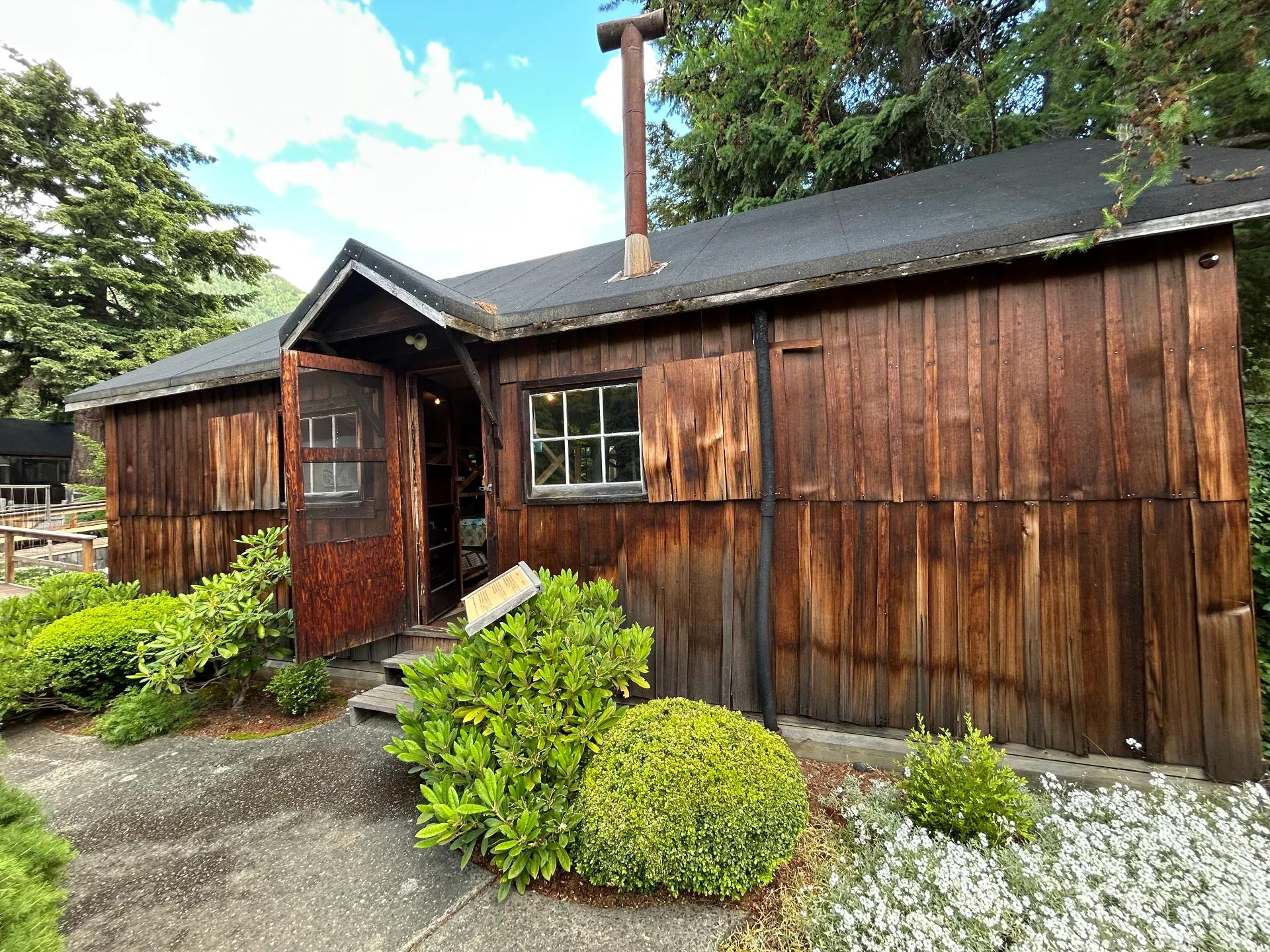
The Center is comprised of five buildings, some originally built at the beginning of the internment. One building was a typical shack that housed two families. The small shack, which was 14 x 28 feet, was divided into two rooms. Each room housed an entire family, some with up to eight people. Life was very hard, especially in the winter. The Internees were responsible for any improvements to the tiny shacks, such as the addition of cedar shakes and sliding windows.
A large building, called Kyowakai Hall, was built in 1943 by the internees and became the religious, cultural, and social center of the camp. Concerned about large group gatherings, the British Columbia Securities Commission ordered the building to be demolished. However, the residents of the camp quickly constructed a Buddhist shrine inside the hall. This ensured that the building would remain a place of worship. The hall hosted many gatherings, weddings, funerals, and ceremonies. It was also the meeting place of the Kyowakai Society, which met regularly to discuss community concerns and find ways to improve conditions for the residents.
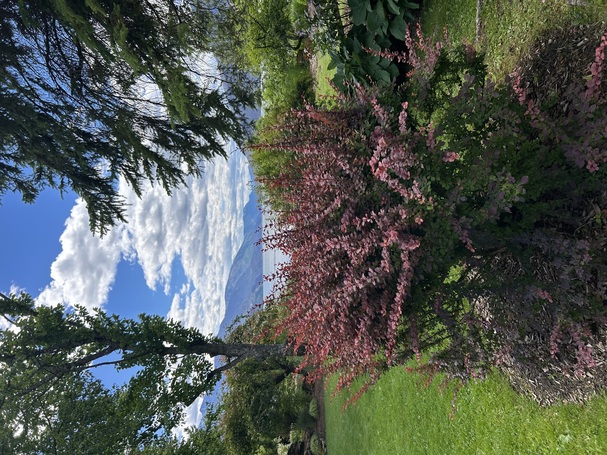
In a nearby area of New Denver, we came upon the Kohan Reflection Garden. Built in the early 1990’s, the garden commemorates the Canadian citizens interned in the surrounding area. The garden is beautiful and peaceful – full of Japanese elements such as lanterns, a ceremonial bell, a graceful bridge, flowering cherry trees, and 12 varieties of maple trees. The setting is beautiful – with trails that have stunning views of Slocan Lake and the surrounding mountains. It is a community gathering place, a perfect venue for weddings, memorials, performances, picnics, etc.
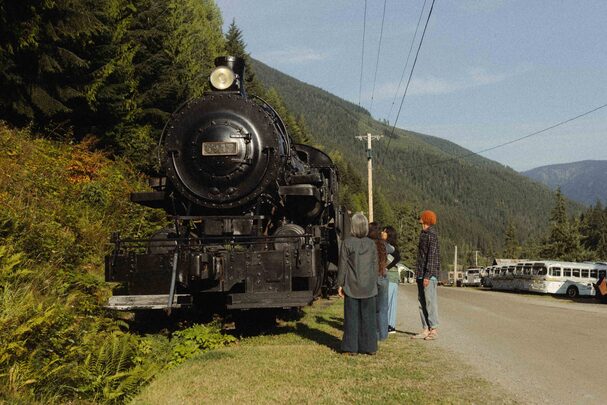
We continued along the Japanese Canadian Legacy Trail by visiting the nearby town of Sandon. This once-thriving silver mining town had become a deserted ghost town by 1940. In 1942, almost a thousand Japanese Canadian citizens were relocated there. One advantage to Sandon was that the buildings that had been abandoned by the miners and their families were easier to make livable. But it was still a harsh environment, located in a flood-prone valley with long, brutal winters. Because of the unforgiving conditions, it was one of the first camps to be closed, with the internees moved to New Denver. Visiting Sandon today is like walking into the past, from the 1908 locomotive parked along the road to the various museums around town that feature both the mining history and the history of the internment. The main museum is the Sandon Museum, which has two floors of exhibits that cover the social and mining history of the town, along with information about other attractions in Sandon.

We took the short 20-minute drive back to New Denver to refuel ourselves at Fat Goat Farm Provisions and Coffee. Fresh sandwiches and so many pastries to choose from; we enjoyed the hour of relaxing here and eating their wonderful food. Then we briefly went back to the Adventure Domes, where we were staying in New Denver. Spacious, bright, and comfortable, the Dome made for a great base while we explored the area, from the culture to the great outdoors.
A very important goal of these memorials is that modern citizens learn from our history and our tragic mistakes and ensure that this type of inhumanity never happens again. That is an important and aspirational goal – it seems that human beings have a hard time learning from history! In fact, during World War One, Canada also interned 8,579 immigrants for the sole crime of having come from the Austro-Hungarian, German, and Ottoman Empires, or the Kingdom of Bulgaria. They were held in camps across the country from 1914 to 1920. Canada has tried to make amends for both the WWI and WWII Internments, offering reparations and keeping the memory of these events alive. You can learn more about the WWI Internments here.
As we began our journey home from the Slocan area, the breathtaking scenery took on a much deeper significance. The mountains, lakes, and quiet forests remain as beautiful as ever, but they also stand as silent witnesses to the courage and resilience of the people who endured unimaginable hardship here. More than just a history lesson, visiting the memorials was an opportunity to honor those who suffered and look in awe at the communities they built under horrible conditions. It is also an opportunity to reflect on our own responsibility to defend human dignity and require our governments to live up to our highest aspirations. The echoes of the past still resonate throughout the Slocan area, reminding us that remembrance is not simply about preserving history, but about shaping a more compassionate future.
Continue reading Part 3 here!
Photo credits: The Sandon Museum (image 3) and Fat Goat Farm Provisions and Coffee (image 4)
Editorial disclosure: lodging, food, and beverages were generously provided.