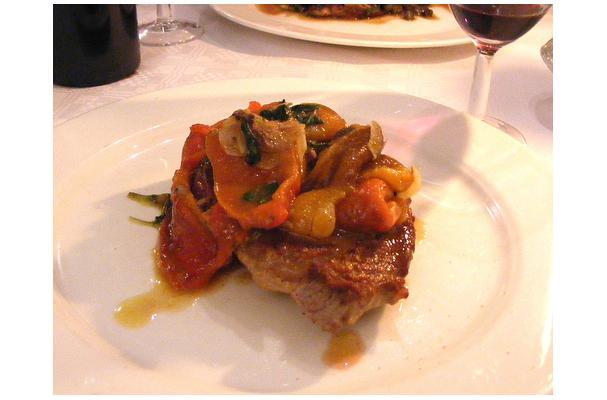
Physical Description
The meat is usually bought boned, rolled, and tied. Flesh is a pale milky color.
Colors: Brown, white
Tasting Notes
Flavors: Savory
Food complements: Braised vegetables
Wine complements: Cabernet sauvignon, Red burgundy
Substitutes: Sirloin, Veal loin roast
Selecting and Buying
Seasonality: january, february, march, april, may, june, july, august, september, opctober, november, december
Choosing: When buying veal, try a specialist butcher (Italian butchers usually have good veal). Meat that is sold as veal, but is a pale-red colour, is not true veal but young beef. Look for creamy white to a pale-pink colouring. The texture of the meat should appear smooth, not grainy. This is an indication of the quality and age of the veal.
Buying: Available at many grocery stores and butcher shops.
Procuring: The meat is from young cattle.
Preparation and Use
Veal is prepared the same way most meats are before cooking, however, due to its leanness, it is often barded and larded, depending on the cut and the cooking method it will undergo. To keep the meat from drying out, veal should not be roasted beyond medium doneness (60° to 65°C).
Conserving and Storing
Take veal home immediately and refrigerate at 0°C or below. Use veal chops and roasts within 3-5 days, and minced veal or stew meat within 1-2 days. You may freeze veal at -18°C or below. If kept frozen, veal will be safe indefinitely, although the quality can be affected with extended freezing. For best quality use frozen veal chops and frozen roasts within 4-6 months and ground veal or stew meat within 3-4 months.
Social/Political
Veal is most closely associated with French cuisine.
History: Eating veal was once a symbol of wealth, because only the rich could afford to kill animals that provided so little meat. It was reserved for festive occasions; hence the association between the return of the prodigal child and the slaughter of a fatted calf.