Total Steps
11
Ingredients
14
Tools Needed
11
Ingredients
- water
- whole fish
- meat
- fresh herbs(optional)
- lemon(optional)
- ginger(optional)
- onion(optional)
- string beans
- carrots
- cauliflower
- corn
- yellow squash
- zucchini
- broccoli
Instructions
Step 1
A <a href="/technique/P5CFVDV7/roasting">roasting</a> pan <a href="/technique/TPWNYF5L/can">can</a> also work as a steamer for larger items, and is an inexpensive alternative to buying a dedicated fish steamer.
Step 2
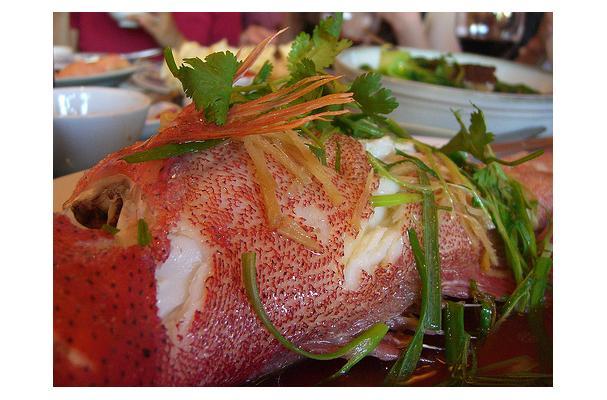
<a href="/technique/WPFKW7GH/steaming">Steaming</a> FoodCulinary expert Colleen Miner and TIPical Mary Ellen host Mary Ellen Pinkham demonstrate how to properly <a href="/technique/WPFKW7GH/steam">steam</a> fish and vegetables.
Step 3
There are many different types of steamers. Examples include pasta cookers, stackable steamers, collapsible steamer baskets, fish poachers and even a simple device like a <a href="/technique/P5CFVDV7/roasting">roasting</a> pan with a rack.
Step 4
The <a href="/technique/P5CFVDV7/roasting">roasting</a> pan is good for holding larger quantities of food. Cover the bottom of the pan with water, and place two used tuna <a href="/technique/TPWNYF5L/can">cans</a> in the pan. Place the rack that came with the roster on the tuna <a href="/technique/TPWNYF5L/can">cans</a>, and place the items to be cooked on the rack. Put the pan over two burners on the stove and <a href="/technique/WPFKW7GH/steam">steam</a> the food. A whole fish should take about 15 to 20 minutes to <a href="/technique/WPFKW7GH/steam">steam</a>.
Step 5
Another way to <a href="/technique/WPFKW7GH/steam">steam</a> foods is to use four chopsticks and a <a href="/technique/HHMRLM85/wok">wok.</a> Place the chopsticks in the <a href="/technique/HHMRLM85/wok">wok</a>, forming a pattern like a tic-tac-toe diagram. Put a glass pan on the chopsticks, put the meat in the pan, cover and <a href="/technique/WPFKW7GH/steam">steam</a>.
Step 6
A great way to <a href="/technique/PMQVQDJ8/flavor">flavor</a> food while it is <a href="/technique/WPFKW7GH/steaming">steaming</a> is to place it on a thick bed of fresh herbs, lemon, ginger or onion. This works for most foods, including fish and vegetables.
Step 7
When <a href="/technique/WPFKW7GH/steaming">steaming</a> fish, place on aluminum foil, then place on the <a href="/technique/WPFKW7GH/steaming">steaming</a> rack. This will prevent certain types of fish from breaking apart. Remember that the <a href="/technique/WPFKW7GH/steaming">steaming</a> time will vary depending on the texture and thickness of fish, but it will usually take about four to six minutes.
Step 8
Vegetables <a href="/technique/TPWNYF5L/can">can</a> also be <a href="/technique/WPFKW7GH/steamed">steamed</a> in the <a href="/technique/7KR3LCHD/microwave">microwave.</a> In a plastic container, add 1/4 to 1/2 cup of water, cover with plastic <a href="/technique/X75YQJ6B/wrap">wrap</a> and make sure to punch a small hole for <a href="/technique/WPFKW7GH/steam">steam</a> to escape. Cook vegetables in small segments of 30 to 60 seconds, stopping to check on the progress.
Step 9
A colander is a good <a href="/technique/W5QQLYTM/substitute">substitute</a> for a vegetable steamer. Place the vegetables in the colander, put the colander in a pot of water, cover and <a href="/technique/WPFKW7GH/steam">steam.</a> Make sure the colander fits in the pot with the cover on.
Step 10
<a href="/technique/WZLWW3YP/clean">Clean</a> and <a href="/technique/PXFDS2MB/trim">trim</a> all vegetables before <a href="/technique/WPFKW7GH/steaming">steaming.</a> Cooking time for each vegetable varies. <a href="/technique/MS47GLJJ/string">String</a> beans, <a href="/technique/VYSXFJY6/carrots">carrots</a> and cauliflower need five minutes of <a href="/technique/WPFKW7GH/steaming">steaming</a>, while corn, yellow squash, zucchini and broccoli need only about two minutes.
Step 11
Food rests above liquid when being <a href="/technique/WPFKW7GH/steamed">steamed</a> and sits in the liquid when <a href="/technique/SNDRKPSQ/poached">poached</a>.