Tteokguk (Korean Rice Cake Soup)
Total Steps
7
Ingredients
14
Tools Needed
9
Related Article
oliviajasonkimIngredients
- mandu or Korean dumplings(optional)
- laver or seaweed strips (gim/nori)(optional)
- 2 eggs eggs (for garnish)(optional)
- 1 teaspoon sesame oil(optional)
- 2 eggs beaten eggs
- sprinkle salt and pepper
- 2 tablespoons soup soy sauce
- 5 cloves garlic, minced
- 2 green onions green onions, thinly sliced
- 1/2 pounds thinly sliced beef strips (tip or sirloin)
- 4 cups garae tteok (rice cake)
- 1/2 onion onion (for stock)(optional)
- cloves garlic (for stock)(optional)
- olive oil
Instructions
Step 1
Cut the beef into thin strips. In a large pot, boil the beef strips. Reduce heat to medium-low and simmer, skimming off any foam or scum using a fine mesh sieve or strainer. Optionally, add half an onion and some garlic cloves to the stock. Adjust heat as necessary to maintain a simmer for 15-20 minutes.
Step 2
Meanwhile, rinse the rice cake slices in cold water and drain well.
Step 3
Stir in the rinsed rice cake slices and soup soy sauce into the simmering stock. Boil gently for 8-10 minutes, or until the rice cake slices start to float. Season the soup with salt and pepper to taste. When the rice cakes are almost cooked, add the thinly sliced green onions and beaten eggs.
Step 4
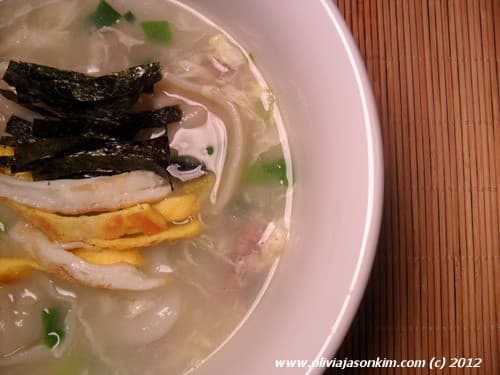
To prepare the garnish: separate the eggs designated for garnish into whites and yolks. In a non-stick pan or skillet, add olive oil and fry the egg whites and yolks separately into thin sheets. Transfer to a cutting board and cut into thin strips. Toast gim (seaweed) sheets over heat until crispy, then cut into thin strips.
Step 5
Ladle the soup into individual bowls, ensuring an even distribution of rice cake slices. Garnish each serving with a handful of the fried egg white strips, egg yolk strips, and seaweed strips.
Step 6
Serve and eat hot to prevent the rice cakes from becoming soggy ('booluh').
Step 7
Optional tip: For a heartier soup, add mandu (dumplings) to the broth a few minutes before adding the rice cakes. (Note: Mandu and other Korean ingredients can be found at Korean grocers or Asian food sections of supermarkets).