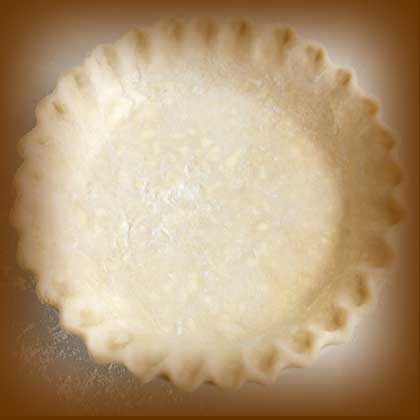
Super flaky pie crust
Total Steps
9
Ingredients
8
Tools Needed
9
Related Article
Stirring the Sauce!Ingredients
- 1 cup butter
- 2 1/2 cups white flour
- 1 large egg
- 2 tablespoons vinegar
- 1 teaspoon sugar
- 1 teaspoon salt (for unsalted butter)(optional)
- 1/2 teaspoon salt (for salted butter)(optional)
- 1/2 cup ice water
Instructions
Step 1
Cut the butter into quarter-sized chunks and place in the freezer for 15 minutes to chill thoroughly.
Step 2
Fill a small glass with ice cubes and top with water to prepare ice water.
Step 3
Whip together the egg and vinegar; set aside.
Step 4
Once butter and water are chilled, combine the butter with flour, salt, and sugar in a large bowl. Using your hands and working quickly, blend the butter into the flour mixture, crumbling until the largest butter pieces are about the size of a pea. Do not over-work the mixture.
Step 5
Add the egg mixture and a few tablespoons of ice water to the flour mixture. Using a fork, toss the liquids with the flour, adding more ice water gradually until the dough just begins to hold together. Briefly knead the dough with your hands until blended, again taking care not to over-work it.
Step 6
Wrap the dough in plastic and place it in the freezer for 10 minutes to chill.
Step 7
Sprinkle approximately 1/4 cup white flour on a clean counter top. Divide the chilled dough in half. Flour your rolling pin and roll one half of the dough from the center outwards to slightly less than 1/4 inch thick. Ensure the rolled dough is large enough to overhang your pie pan by 1 1/2 inches.
Step 8
Gently fold the rolled dough in half, then in half again. Place the point in the center of your pie pan and unfold the dough to lay it evenly in the pan. Trim the excess edges, then roll them under to create an edge around the outermost rim of your pie pan. Crimp the edge with your fingers.
Step 9
If pre-baking the crust (e.g., for cream pies, quiches, or pot pies): Evenly place pie weights into the crust or sit a second pie pan on top of the crust. Bake in a 325-degree oven for 15 minutes, then immediately remove the weights. For fruit pies and other dishes not requiring a pre-baked shell, your crust is ready for filling. You may also wrap a raw shell in plastic and freeze it for later use.