


Japanese Knotweed
About
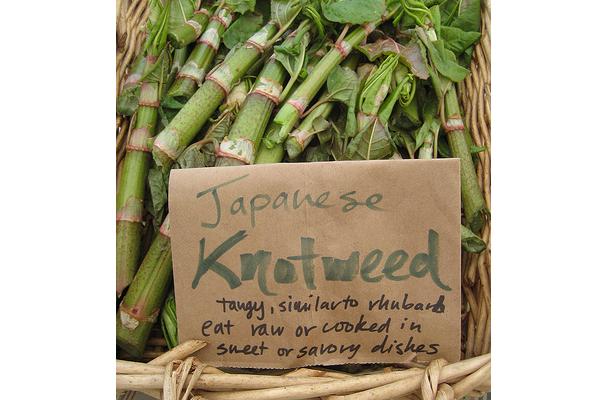
Similar in consistency and flavor to Rhubarb, Japanese Knotweed grows wild in many areas. It has a sour grassy flavor and can be used anywhere a sour fruit would be employed.
To prepare, remove the leaves and peel the stems. Slice the stems and steam like a vegetables, add soups, fruit compotes, and jams, or bake in dessert dishes. The flavor is strong, you can use in a ratio of 1 to 10 with other fruit.
Considered an invasive species in the United States, causing many municipalities to encourage it's consumption. Japanese Knotweed has mild laxative properties and is rich in resveratrol, a powerful antioxidant.
Information
Other names: Japanese Knot Weed
Translations: Japānas Knotweed, Japonų Ginčai, Japoneză troscot, Japanski Knotweed, Nhật nghể, Japoński Knotweed, Japanse duizendknoop, जापानी Knotweed, Knotweed japonês, Японский Нотуид, Ιαπωνικά Knotweed, اليابانية Knotweed, 일본어 Knotweed, Křídlatka japonská, Јапански Кнотвеед, 虎杖, Japonesos knotweed, Japonski Knotweed, Křídlatka japonská, Poligono giapponese, יפנית ארכובית, Japanska Knotweed, Jepang Knotweed, 日本ノウィード, Renouée du Japon, Japanische Staudenknöterich, Japan-Pileurt, Japansk Knotweed, Japoneses knotweed, Японський Нотуід, Japanin Knotweed, Японски Knotweed
Tasting Notes
Substitutes: Rhubarb


