Gelato
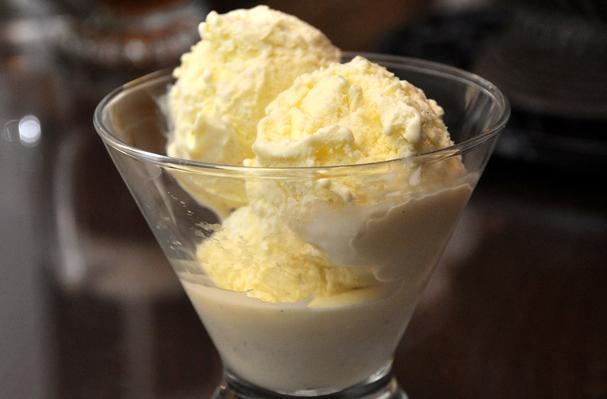
Unlike North American ice cream, most (not all) Italian gelati are made with whole milk and egg yolks instead of cream, making them deliciously dense. Whole milk in Italy tends to be richer than in the United States, so many recipes here add a bit of cream to compensate. This recipe is very rich. You can adjust the amount of egg yolks as well as use lower fat milk for a less creamy version. You can also add other flavors or fruits. Here are a few tips when preparing a true Italian gelato: Use the freshest ingredients possible: get your eggs, cream and milk at your farmer's market If using fruit, buy what's fresh and seasonal Opt for vanilla bean instead of extract Bring eggs to room temperature: you'll stir less and prevent air from getting incorporated Strain your custard: use a fine mesh sieve or a cheesecloth-lined colander Eat it fresh from the machine or, if frozen, let it soften before serving
Total Steps
7
Ingredients
6
Tools Needed
8
Ingredients
- pinch salt
- 1 inch vanilla pod, sliced half lengthwise
- 1 cup heavy cream
- 2 1/4 cups whole milk
- 3/4 cup sugar
- 5 large egg yolks, brought to room temperature
Instructions
Step 1
<a href="/technique/3CYMY2D7/whisk">Whisk</a> together the egg yolks and sugar until thick (about 2-3 minutes).
Step 2
In a large saucepan, combine the whole milk, heavy <a href="/technique/R3P5MM3Z/cream">cream</a>, vanilla bean and a pinch of <a href="/technique/DPSVTKVY/salt">salt.</a> <a href="/technique/XZFHRHHF/heat">Heat</a> over medium <a href="/technique/XZFHRHHF/heat">heat</a>, <a href="/technique/DRM2WPZ4/stirring">stirring</a> over medium <a href="/technique/XZFHRHHF/heat">heat</a>, until bubbles form and pop around the edges. Remove from <a href="/technique/XZFHRHHF/heat">heat</a>.
Step 3
Slowly <a href="/technique/3CYMY2D7/whisk">whisk</a> about ¼ of the <a href="/technique/FVYNJCCW/warm">warm</a> mixture into the egg mixture; then add it all back into the milk mixture in the saucepan. <a href="/technique/DRM2WPZ4/stir">Stir</a> constantly over low <a href="/technique/XZFHRHHF/heat">heat</a> until mixture is slightly <a href="/technique/LXP6HLBF/thickened">thickened</a> and begins to <a href="/technique/6BTCX64M/coat">coat</a> the back of a wooden <a href="/technique/NX588QBK/spoon">spoon.</a> Be sure to not <a href="/technique/GFSF4J5F/simmer">simmer</a>.
Step 4
Fill a large stainless steel bowl with <a href="/technique/RP8LCDPZ/ice">ice</a> and water.
Step 5
<a href="/technique/KXN5X3J8/strain">Strain</a> the custard through a fine sieve (or a cheesecloth-lined colander) into a smaller stainless steel bowl, then set into the <a href="/technique/RP8LCDPZ/ice">ice</a> bath. <a href="/technique/DRM2WPZ4/stir">Stir</a> occasionally and let <a href="/technique/FK6MC4B6/chill">chill</a> until completely <a href="/technique/GZFHJC5K/cooled">cooled</a>.
Step 6
Transfer mixture to an <a href="/technique/RP8LCDPZ/ice">ice</a> <a href="/technique/R3P5MM3Z/cream">cream</a> machine and follow manufacturer’s instructions.
Step 7
Best when <a href="/technique/Y6MVNCHX/served">served</a> immediately, although it will keep in the freezer for up to a month.