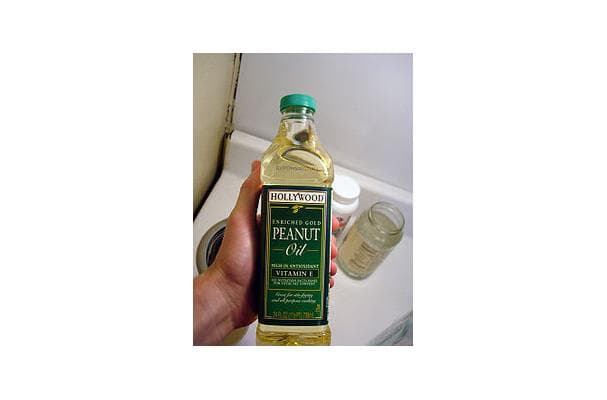
About This Food
Peanut Oil is an organic oil pressed from peanuts. This oil has a high smoke point and can therefore be used in cooking for frying foods such as Turkey and Chicken.
Peanut Oil is high in fatty acids and monounsaturated fat. It is therefore a healthy oil than can be used in place of other oils. It is commonly used in Asian and Japanese cooking.
Refined peanut oil has a high smoking point (around 450°F = 232°C)
Information
Other names: Groundnut Oil
Translations: Zemesriekstu eļļa, Žemės riešutų aliejus, Ulei arahide, Kikiriki ulje, Dầu đậu phộng, Olej arachidowy, Pinda-olie, मूंगफली का तेल, Óleo de amendoim, Арахисовое масло, Φυστικέλαιο, الفول السوداني النفط, 땅콩 기름, Arašídového oleje, Кикирики уље, Mani Oil, 花生油, Oli de cacauet, Arašidovo olje, Arašidového oleja, Olio di arachidi, פינאט אויל, Jordnötsolja, Minyak Kacang Tanah, ピーナッツ油, Huile d'arachide, Erdnuss-Öl, Aceite de cacahuete, Арахісове масло, Maapähkinäöljy, Фъстъчено масло
Physical Description
Thick and liquid, smooth and greasy.
Colors: Clear and yellow-ish
Tasting Notes
Flavors: Mild, Bland
Mouthfeel: Greasy, Smooth
Food complements: For frying: chicken, Turkey
Substitutes: Vegetable oil, Olive oil
Selecting and Buying
Seasonality: january, february, march, april, may, june, july, august, september, opctober, november, december
Peak: january, february, march, april, may, june, july, august, september, opctober, november, december
Buying: Peanut oil should be available in all grocery stores along side vegetable and olive oil.
Procuring: Peanut oil is made from pressed, steamed peanuts.
Preparation and Use
Peanut oil is used mainly to fry meats in and generally has the same uses as vegetable and olive oil. Peanut oil can be used in cooking, lighting, fuel and as a food constituent. Peanut oil has a better keeping quality than soybean, corn, and safflower oils and is a good source of Vitamin E. Used directly as food, peanut is a major crop for subsistence. The multiples uses of the peanut make it an excellent cash crops for domestic markets as well as foreign trade.
Conserving and Storing
Will keep for around 6 months once opened. Should be kept in a refrigerator.