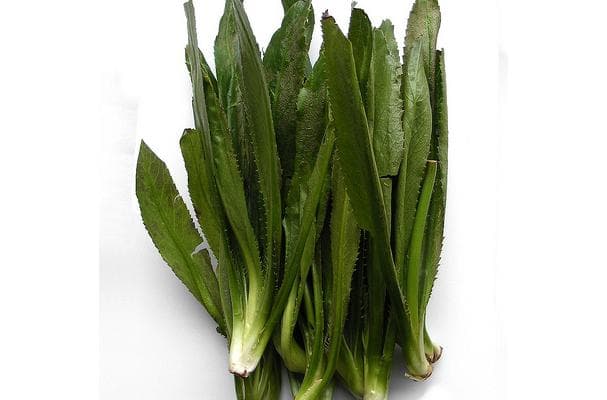
Physical Description
The appearance of culantro and cilantro are different but the leaf aromas are similar, although culantro is more pungent. Fresh, it is a somewhat thin bright green leaf with a a stem.
Colors: green
Tasting Notes
Flavors: Pungent
Mouthfeel: Earthy
Food complements: Salsa, South american cuisines
Wine complements: Semi-sweet wine
Beverage complements: Corona or other summer beer with a lime wedge
Substitutes: Cilantro or coriander
Selecting and Buying
Choosing: Fresh leaves should be blemish-free, fresh smelling and whole.
Buying: Not widely used in the US or in Europe. Try specialty stores, like those for South American or Thai cuisine. Also try gourmet stores, or order on line.
Procuring: Culantro grows naturally in shaded moist heavy soils near cultivated areas. Under cultivation, the plant thrives best under well irrigated shaded conditions.
Preparation and Use
It is used mainly as a seasoning in the preparation of a range of foods, including vegetable and meat dishes, chutneys, preserves, sauces, and snacks. The most popular and ubiquitous example is salsa, a spicy sauce prepared from tomatoes, garlic, onion, lemon juice, with liberal amounts of chiles. These constituents are fried and simmered together, mixed to a smooth paste and spiced with fresh herbs including culantro.
Cleaning: Wash well with cool, clean water, dry thoroughly.
Conserving and Storing
Fresh and cut from the plant, store in the refrigerator wrapped loosely in a damp paper towel or cloth. If in a sauce or salsa, store in the refrigerator for up to a couple weeks.
Social/Political
Indigenous to continental Tropical America and the West Indies. Widely used in dishes throughout the Caribbean, Latin America, and the Far East.
History: The plant has been used in traditional medicines for fevers and chills, vomiting, diarrhea, and in Jamaica for colds and convulsions in children.