Lacto-Fermented Dill Pickles
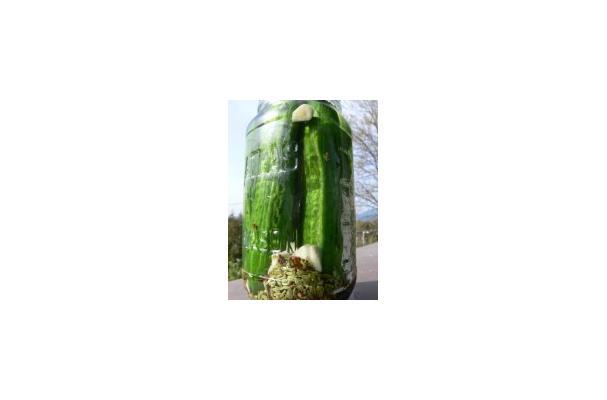
When I first tasted my homemade lacto-fermented pickles, I wished I had made more! I didn’t have horseradish when making my first batch so they are pretty soft, but the taste sure makes up for that. If you add plenty of mustard seeds it helps to keep them more crisp. These pickles are great for helping to digest a heavy meal, lots of good lacto-bacilli.
Total Steps
9
Ingredients
11
Tools Needed
4
Ingredients
- 1.5 tablespoons sea salt
- 1.0 litre unchlorinated water
- small handful fennel seeds
- 10 black peppercorns
- 1.0 tablespoons mustard seeds
- 7 cloves
- 6 garlic, sliced
- 10 small to medium sized cucumbers, washed
- 2 dill flower heads and leaves
- small handful coriander seeds
- 1.0 horseradish root, sliced(optional)
Instructions
Step 1
Add the salt to a bottle of water and shake it until it dissolves.
Step 2
Wash the cucumbers well and put the spices and garlic into the jar.
Step 3
Pierce the cucumbers with a fork a few times so the brine will penetrate into them.
Step 4
Squeeze the cucumbers upright into the jar (with the horseradish) and place the dill on top.
Step 5
Fill the jar with the brine and make sure that everything is covered, leaving about a half inch space from the top of the jar.
Step 6
Close the jar tightly and place the jar in a warm spot in the kitchen for a few days.
Step 7
Bubbles will start appearing, which shows that the fermentation has begun.
Step 8
When the bubbles have settled down, place the jar in a cool place (a cellar if you have one) for about six weeks before you eat them (the author usually eats them after about a week or two).
Step 9
During the fermentation process, some of the bubbling liquid may leak out; this means it is working, so don't worry. The author usually just puts a towel under the fermenting jars.