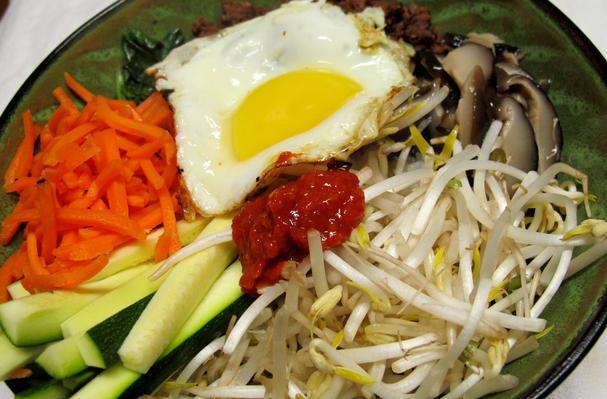
About This Food
Gochujang is a spicy chili paste made with fermented soybean paste, rice flour, salt and sun-dried Korean chilies (called gochu in Korean).
Even though it's only been around for about 300 years, it's an indispensable condiment in Korean cuisine.
Information
Other names: Korean Chili Paste, kochujang
Physical Description
Gochujang usually appears as a dark red, thick paste with a similar texture to tomato paste.
Colors: dark red, crimson,
Tasting Notes
Flavors: pungent, hot, sweet, salty, savory, and sour
Mouthfeel: Spicy, Earthy
Food complements: Grilled meats, Kimchi, Bibimbap, Stews
Wine complements: Reisling, Gewurtztraminer
Beverage complements: Korean beer, Soju
Substitutes: Sriracha, Miso
Selecting and Buying
Buying: Gochujang is widely available in Korean and Asian grocery stores.
Preparation and Use
Gochujang is made with doenjang (Korean fermented soybean paste, similar to miso) mixed with salt and hot red pepper powder. Gochujang is used in many different Korean dishes including bibimbap (rice bowl mixed with vegetables), dakkalbi (spicy grilled chicken), gochujang jjigae (gochujang stew). It is also used as a base for making other condiments like chogochujang (초고추장) and ssamjang (hangul: 쌈장).
Conserving and Storing
The average expiration date of gochujang ranges from 12 to 18 months. It needs to be stored in a cool, dry place and must be refrigerated after opening.