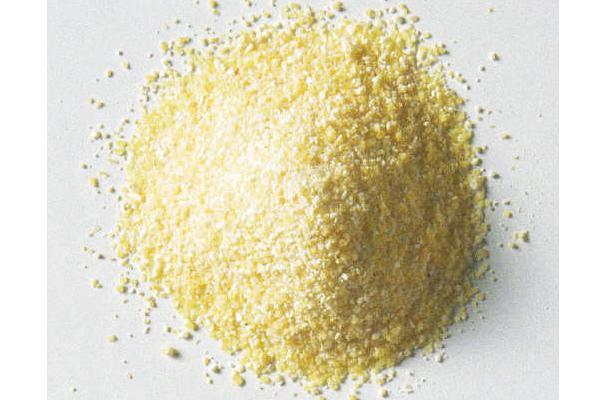
Physical Description
Cornmeal is flour ground from dried corn. It is a common staple food, and is ground to fine, medium, and coarse consistencies
Colors: yellow
Tasting Notes
Flavors: nutty, bland
Mouthfeel: Soft, Gritty
Food complements: Beans, Peas, Greens, Peppers
Wine complements: White wine, Red wine
Beverage complements: Beer, Mead
Substitutes: White cornmeal, Blue cornmeal, Corn grits, Polenta, Corn flour
Selecting and Buying
Seasonality: january, february, march, april, may, june, july, august, september, opctober, november, december
Choosing: Steel ground yellow cornmeal, common mostly in the United States, has the husk and germ of the maize kernel almost completely removed.Stone ground cornmeal retains some of the hull and germ, lending a little more flavor and nutrition to recipes.White cornmeal (mielie-meal) is more traditional in Africa. It is also popular in the Southern United States for making cornbread.[
Buying: Look for fresh stone ground cornmeal at local farmers' markets.
Procuring: Can either be stone ground or steel ground.
Preparation and Use
Stone ground yellow cornmeal can be used for cornmeal cakes. It can also serve as a release agent to prevent beads and pizzas from sticking to pans when being baked. It can also be used to coat English muffins.
Conserving and Storing
Steel ground yellow cornmeal can be conserved indefinitely if stored in an airtight container in a cool, dry place.
Stone ground yellow cornmeal however is slightly more perishable but will store longer if refrigerated. It too can have a fairly long shelf life for months if kept in a reasonably cool place.
will store longer if refrigerated. However it too can have a fairly long shelf life of many months if kept in a reasonably cool place. It can also be used for cornmeal cakes.
Social/Political
In the United States, the finely ground cornmeal is also referred to as cornflour. However, the word cornflour denotes cornstarch in recipes from the United Kingdom.