About This Food
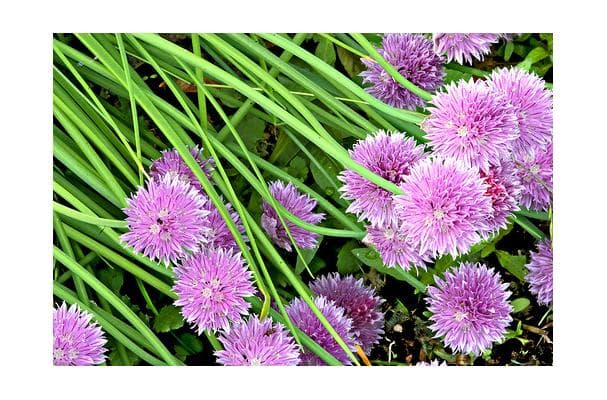
A flowering perennial, hardy plant that produces many green shoots of tubular leaves, which are best used when new. The leaves of Chives have a mild onion flavor and can be chopped and used in salads, stir fries, soups, marinades, cheese spreads, bread and many other foods.
Chives are rich in vitamin C and are believed to aid digestion.
Information
Other names: Schnittlaunch, Civa, Cebolleta, Cepa, Ciboulette, Erba Cipollina
Translations: Maurloki, Česnakai, Arpagic, Vlasac, Hẹ, Szczypiorek, Bieslook, Gressløk, Cebolinho, Σχοινόπρασο, الثوم المعمر, 향신료, Pažitka, 韭菜, Cebollí, Drobnjak, Pažítka, Erba cipollina, שום העירית, Gräslök, Лук власац, チャイブ, Ciboulette, Schnittlauch, Purløg, Cebollino, Ruohosipulitupsujen, Сибирски лук
Physical Description
Chives grow in clumps like grass, sending up graceful, hollow, thin leaves up to 12 inches. No large bulb forms underground. Thus, it is the leaves that are the source of the onion flavour.
Colors: green
Tasting Notes
Flavors: mild onion flavour
Mouthfeel: Crunchy, Sharp, Peppery, Spicy
Food complements: Salad greens, Tomatoes, Cheeses, Eggs
Wine complements: American gewürztraminer, Verdicchio, Pouilly-fumé
Beverage complements: Hot tea
Substitutes: Green onions, Scallions, Garlic chives, Chinese garlic stems, Chopped dried chives
Selecting and Buying
Seasonality: january, february, march, april, may, june, july, august, september, opctober, november, december
Choosing: Choose fresh, uniform-sized, evenly green leaves with no signs of wilting, yellowing or drying.
Buying: Most large grocery stores stock fresh chives in the produce department all-year round. Chives are also available freeze-dried in the spice section.
Procuring: Chives are available fresh, frozen, and freeze-dried. Dried chives have significantly less flavor than fresh chives. Also known as Chinese chives, garlic chives (Allium tuberosum), can be used and stored in the same manner as chives. They are distinguishable from chives by their flat, broader leaves and fragrant white flowers, otherwise, they look very similar in appearance.
Preparation and Use
hives are a wonderful addition to the beginner's garden. They impart a light onion flavor in any dish and can be used interchangeably in recipes calling for onions. There is even a variety of chives that tastes like a blend of onion and garlic.
Cleaning: rinse lightly in cool water
Conserving and Storing
Store fresh chives in the refrigerator in a plastic bag for up to a week. Do not wash until ready to use them, as excessive moisture will promote decay.