About This Food
Calico scallops are smaller and less expensive their cousin, the bay scallop. Because calico scallops are harvested in vast quantities they are not shucked by hand but are steamed to open their shells. Calico scallop meat can be identified by its whitened edges which have been partially cooked by the steaming.
Information
Translations: Calico ķemmīšgliemene, Calico Šukutės, Calico scoică, Calico Jakovljeva kapica, Calico Sò Điệp, Calico Przegrzebek, Calico Geschulpt, केलिको सीप, Calico Vieiras, Калико гребешка, Calico Χτένι, كاليكو الإسكالوب, 옥양목 가리비, Kaliko Scallop, Калико тави, Calico skelop, 卡利索扇贝, Calico vieires, Budala pokrovača, Kaliko Scallop, Calico capesante, Calico pilgrimsmussla, Calico Kerang, キャリコホタテ, Calico pétoncles, Calico Kammusling, Calico Kamskjell, Calico vieiras, Каліко гребінця, Calico kampasimpukka, Calico раковина
Physical Description
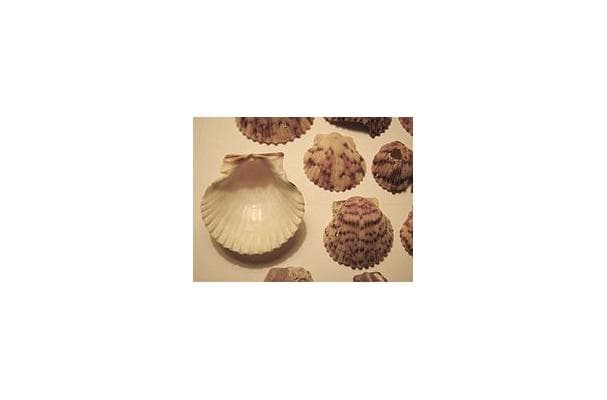
This species grows up to three inches in maximum width, and is similar in shape and sculpturing to the Atlantic bay scallop. Both valves of the shell are cupped. The shell near the hinge is extended into "ears", as is the case in all scallops. The shell of the Atlantic calico scallop has about twenty radial ribs, which are sometimes roughened by growth lines. The exterior coloration of the upper (left) valve is dark yellow or pink, with striking blotches of red which sometimes form stripes. The lower (right) valve of this scallop is whitish with small reddish or purple spots. It has a white interior, often with brown patches on the "ears" and top edge.
Colors: ark yellow or pink, with striking blotches of red which sometimes form stripes.
Tasting Notes
Flavors: sweet, earthy
Mouthfeel: Firm and chewey when cooked
Food complements: Citrus, Fresh herbs
Wine complements: White wine, Rose
Beverage complements: Beer, Cider, Lemonade
Substitutes: Bay scallops, Sea scallops, Clams
Selecting and Buying
Choosing: Scallop meats are usually shucked (taken out of the shell) right after harvest. Look for scallops with a briny, sweet aroma. Meats should be firm, translucent, ivory to pinkish-white color. Avoid water-soaked scallops, which will excrete a milky white liquid.
Procuring: The Atlantic calico scallop lives in the ocean (it is not found in bays) east of Cape Lookout and southwest of Beaufort Inlet and lives in up to 100-foot depths. The shells are commonly found washed up on sound and ocean beaches.
Atlantic calico scallop, Argopecten gibbus (Linnaeus)
This species ranges from Delaware to Brazil and is still sometimes fished commercially.