About This Food
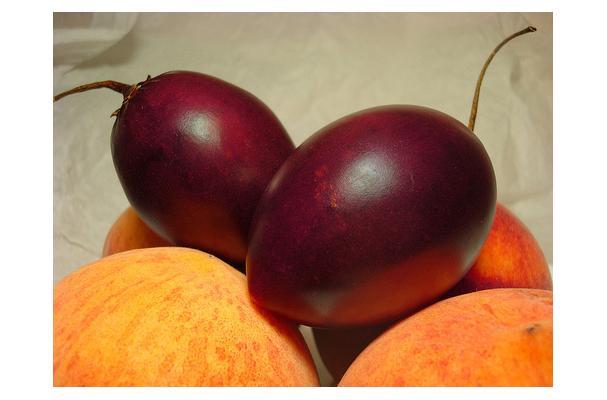
The tamarillo, or "tree tomato" is a tangy, slightly sweet fruit, usually eaten raw (the flesh only; the skin is bitter), but also stewed, juiced, or baked. It is similar to kiwi or passion fruit.
It makes a good breakfast when split in half and lightly sugared. Popular in New Zealand. In Colombia, Ecuador, and Sumatra the fruit is crushed and mixed with water and sugar to make a juice.
Information
Other names: Tree Tomato, Terong Belanda, Tomate De Arbol, Dutch Eggplant, Cyphomandra Betacea, Solanum Betaceum
Translations: コダチトマト, Cyfomandra grubolistna, Тамарилло, Тамарилло, Тамарілло, Puutomaatti
Physical Description
The tamarillo are egg shaped with a thin smooth skin.
Colors: Reddish Orange, red, gold and amber
Tasting Notes
Flavors: Tart, citrus, sour
Mouthfeel: Tart, Tangy, Firm
Substitutes: Kiwi, Tomatoes
Selecting and Buying
Seasonality: may, june, july, august, september, opctober
Peak: may, june, july, august, september, opctober
Choosing: Choose firm, blemish-free fruit that's heavy for its size. When ripe, tamarillos should be fragrant and should yield slightly to palm pressure.
Buying: Tamarillos are available from May through October in specialty produce stores and some supermarkets.
Procuring: This fast-growing evergreen tree has large, heart-shaped leaves, clusters of caramel-scented white flowers and an excellent fruit tree for small gardens in warmer temperate zones, but it can also be grown under glass in colder regions. Many cultivars have been developed as a result of grower selection; and, since the plants are easily grown from seed, many different characteristics develop, resulting in newer names.
Preparation and Use
Tamarillos can be eaten fresh or cooked, and are used for both sweet and savory dishes. One requisite, however, is sugar, which reduces the fruit's natural tartness and enhances its flavor. Tamarillos are ripe when soft to the touch; but the tannin-containing, very bitter skins have to be removed before eating. This is accomplished by plunging the fruit into boiling water for about three minutes and then into ice water.
Cleaning: Rinse under cool water. Remove the bitter exterior skin and eat the center fruit.
Conserving and Storing
They can be ripened at room temperature. Once ripe, they should be refrigerated, tightly wrapped in a plastic bag, up to 10 days.