


Was New Mexico really the first state in the United States where the European grape - Vitis vinifera - was planted? Not California? Yes, it is true! In 1629, Spanish missionaries planted grapes 75 miles south of Albuquerque near the Rio Grande River.
Indigenous Farming History
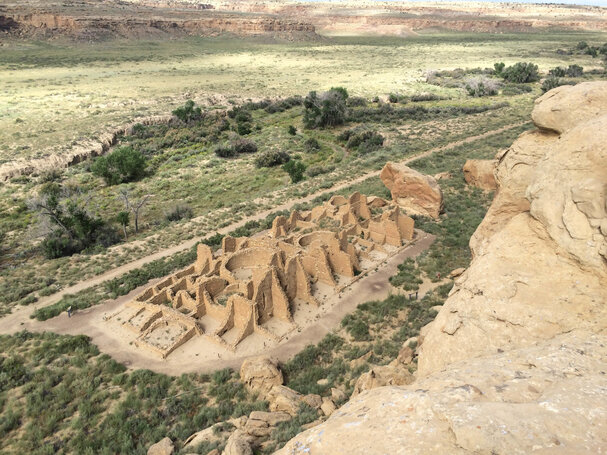
Farming in a desert with extreme temperatures, harsh winters, and droughts is challenging. Around 1000 CE, the Ancestral Puebloans prospered in Chaco Canyon, north of Albuquerque. The Chaco Culture National Historical Park, a world heritage site, commemorates their advanced irrigation techniques that supported successful agriculture.
The Ancestral Puebloan Society, you might say, was on the cutting edge of developing farming methods to deal with that desert environment. Their methods included building basic canals and slope washes to drain rainwater from the mesas to the valley floor. Fast forward to today, and farming continues in the area. The Santa Ana Pueblo Farms and the Navajo Agricultural Products Industry are currently very active. The Navajo Nation is the largest tribe in the United States and has one of the largest contiguous farming operations in the U.S. Some 70,000 acres are growing potatoes, alfalfa, corn, and pinto beans, to name a few.
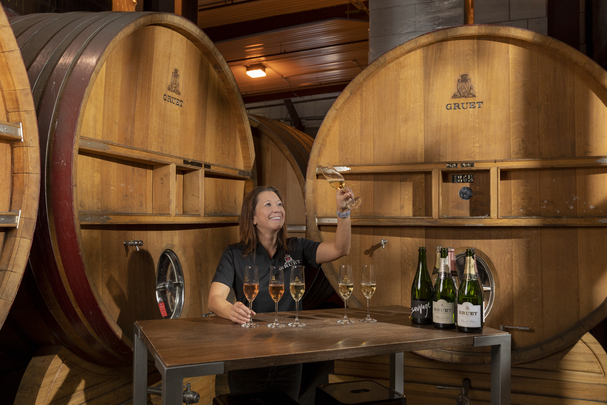
Carrie Gurule from Nuclear Medicine to Wine
Newly appointed Head Winemaker Carrie Gurule, at Gruet Winery, has deep roots in New Mexico. Her grandparents' homestead goes back to the early 1900s, and that land is now producing wine.
Carrie’s career path was somewhat unconventional. Inspired by her atomic engineer father, she studied nuclear medicine at the University of New Mexico. Carrie worked in the nuclear medicine field for some 10 years, and after that, was ready to transition to another field.
It was very fortunate that her dad, in his retirement, decided to farm the land that was homesteaded by his wife Esperanza's family in 1906. They planted wine grapes in 1998 and started La Esperanza Vineyard and Winery.
So when Carrie was ready to make a career transition, it was natural to work at her family’s winery. She indeed got the wine bug! She was involved in every aspect of the operation - from moving rocks, planting in the vineyard, making the wine, and building customer relationships. After working there for a while, her parents came up with a discreet suggestion. They suggested that it was time for Carrie to move on, paraphrasing the statement: “We can’t afford you.”
Certainly, no hard feelings, and Carrie was ready and able to spread her wings and establish herself in the wine industry. She first worked at a New Mexico winery for several years, from lab tech to assistant winemaker. Then she spent a year in Minnesota working at a winery, which was where she caught the “bubble bug”. This serves her well in her current job, specializing in sparkling wine. Also, a highlight in Minnesota: she met her husband.
Carrie returned to New Mexico to work in the wine industry and, a short time later, was hired by Gruet Winery. Carrie initially worked in the lab using her technical skills in quality assurance. Then she worked her way up the ladder from Assistant Winemaker to Head Winemaker. Along the way, additional skills were obtained in France for a Champagne Master Class and at UC Davis for a winemaking certificate.
Gilbert Gruet planted his first vineyards in 1952 in Bethon, which is located in the Champagne region of France. He initially established Gruet et Fils and later founded G. Gruet & Fils. It is now managed by Gilbert’s daughter.
What is the New Mexico connection? In 1983, while traveling through the southwestern United States, Gilbert met a group of local winemakers in New Mexico. Upon learning about the climate and soil conditions, Gilbert decided to purchase some land and plant an experimental vineyard in Engle, NM. Two of Gilbert’s children, Laurent and Nathalie Gruet, moved to New Mexico in 1984 for the purpose of producing sparkling wine in New Mexico, and their first release was in 1989. Laurent served as the head winemaker, achieving many awards for their sparkling wine. From gold and silver at the San Francisco Wine Competition, along with 90+ ratings from the prestigious Wine Spectator.
Laurent has since left the company, and Carrie is now the head Winemaker. Gruet Winery is now owned by Seattle-based Precept Wine & Spirits. They are dominant in the Pacific Northwest wine business and have close to 4,000 planted vineyard acres. It is a great relationship since Gruet needs to source much of its grapes outside of New Mexico, and Percept can certainly help with that.
Tastings
Gruet Winery primarily produces sparkling wine in the traditional method (Méthode Champenoise or Méthode Traditionnelle). In this method, the secondary fermentation is done in the bottle. Compared to other methods of making sparkling wines, this method is widely regarded by many as producing more complex, refined, and higher-quality sparkling wines than other methods. All of our tastings listed below were for sparkling wines.
New Mexico Sparkling Pinot Meunier Rosé
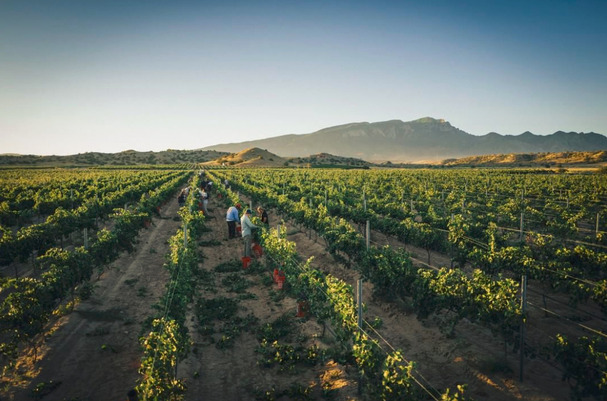
The grapes are all from the Tamaya Vineyard and are 75% Pinot Meunier, 20% Pinot, and 5% Chardonnay. These three grapes are known as the “holy trinity of Champagne”. The Tamaya Vineyard is a unique partnership between the Pueblo of Santa Ana and Gruet Winery. Gruet Winery oversees the operation; however, vineyard maintenance and harvesting are managed by the Pueblo. The Pueblo has other farming operations in New Mexico. Pueblo of Santa Ana is also referred to as Santa Ana Pueblo. We paired this wine with a delicious omelet while we waited for the Super Bowl to start. The delightful, crisp, and dry wine went even better with the Seahawks' victory!
New Mexico Blanc de Blancs Artist Series
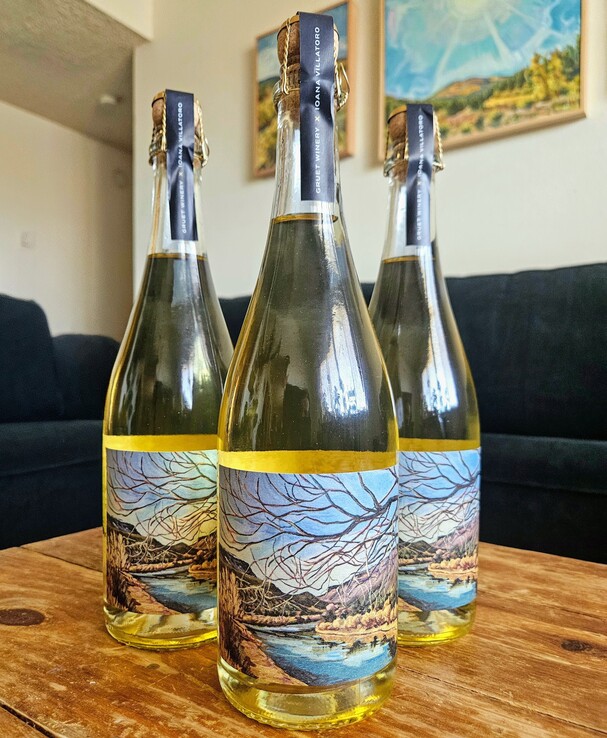
What is special about this 100% Chardonnay with all the grapes sourced from New Mexico? With flavors of citrus and subtle minerality, this vibrant and crisp wine paired delightfully with seared chicken. The bubbles in the glass made it a sparkling, festive drink. For their stunning labels, the winery collaborated with New Mexico-based artist Ioana Villatoro.
Gruet Brut Rosé
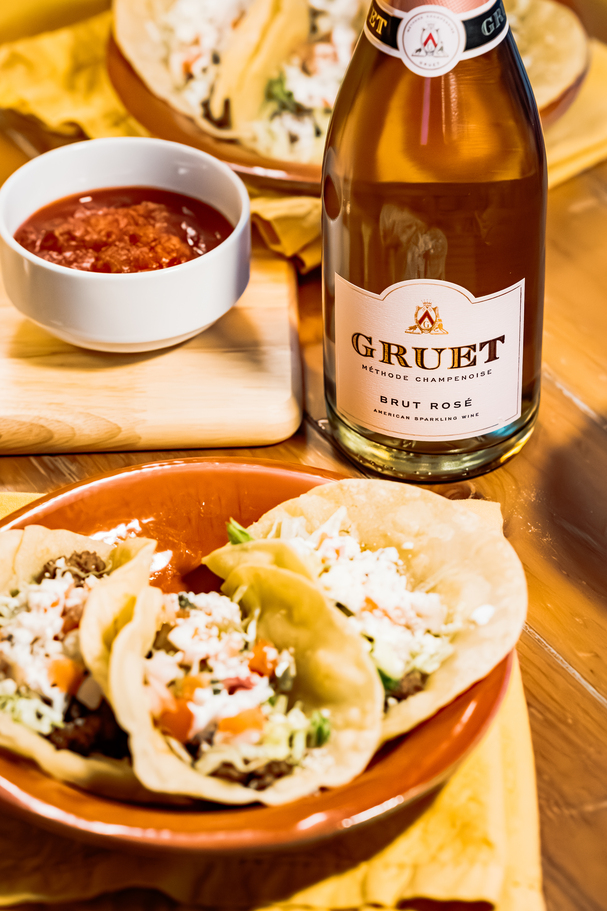
This wine had a beautiful, shimmering pale pink color and tasted as wonderful as it looked. It had aromas of apple and strawberry and was fuller and more textured than the Blanc de Blanc. It had a vibrant acidity and quiet richness. Carrie had suggested we try it with something a bit spicy – so we paired it with tacos, and it was delicious.
Gilbert Gruet Grande Reserve
This 100% Chardonnay is aged in oak for a minimum of three years. It gleams pale gold in the glass, sending up a fine, persistent stream of bubbles. The nose opens with lemon zest and crisp green apple. On the palate, it’s both vibrant and silky—bright citrus and orchard fruit. Notes of baked apple and hazelnut linger on a long, mineral finish. It paired beautifully with grilled salmon.
Recipes from Mom
These are just some of the wines we sampled, and we look forward to sampling others and, of course, visiting New Mexico.
As a postscript, Carrie shared that she has kept all of her mom’s handwritten recipes. The green chili stew has great reviews, and we will try it soon, probably with the Gruet NV Brut.
Green Chili Stew
Beef stock
2 sirloin steaks or 2 round steaks
1 tbsp oil
5 medium potatoes, diced
1 quart bag of green chilis, roasted and diced
1 yellow onion, diced
3 cloves garlic, crushed or grated
Salt & pepper
Cook sirloin or round steaks until tender, then remove and cube. Heat oil in a skillet, then add the potatoes, cover, and cook for 10 minutes. Then add to the stew pot. Cook the chilies and the onion for about 10 minutes, then add them to the stew pot, with the liquid from the skillet. Add beef stock, garlic, salt, and pepper, and cook covered for 30 minutes to 1 hour.
Editorial Disclosure: Wine was generously provided.
Image Sources:


