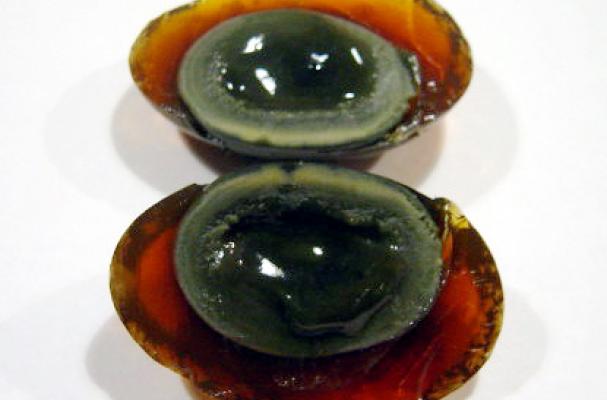
This week's Stinky Foods star is the century egg. This Chinese delicacy is a black, aged egg that never spoils. Click through the pages below to learn 10 weird facts about century eggs.
-----
1. Century eggs are covered in rice husks, clay, salt and ash.

The egg's shell protects it from these elements for the duration of the several months it spends buried.
-----
2. A century egg has a different consistency from regular eggs.

The century egg's white turns into a creamy brown jelly, while the yolk turns into a black powdery substance.
-----
3. Century egg consumption is thought to be therapeutic.

Some of the ailments it's said to heal include high blood pressure and low appetite.
-----
4. Century eggs are historically made with duck eggs.

That said, century eggs can also be prepared using goose, chicken, turkey and quail eggs.
-----
5. Today's cooks sometimes prepare century eggs differently than the traditional method.

A recent, more efficient preparation method involves soaking the eggs in a super-strong alkaline solution. Zinc oxide or lead oxide are sometimes added for soft-yolked century eggs.
-----
6. Sodium hydroxide is the primary catalyst in the physiochemical changes that occur in century eggs.

Sodium hydroxide, which is formed in the paste or solution that coats the egg, causes the albumen and yolk to change color and consistency.
-----
7. Century eggs smell like some cleaning products.

The hydrogen sulfide and ammonia produced during the fermentation process give century eggs their distinctive smell.
-----
8. Century eggs can be a garnish or standalone snack.

Century eggs are commonly eaten with tofu or lean pork congee.
-----
9. Century eggs might make you sick.

Since some century eggs are made with lead oxide, there's a possibility that you could be exposed to lead if you eat them.
-----
10. You can buy century eggs outside of China.

Most Asian grocery stores sell century eggs. Do you dare try one?