Pre-Ferment
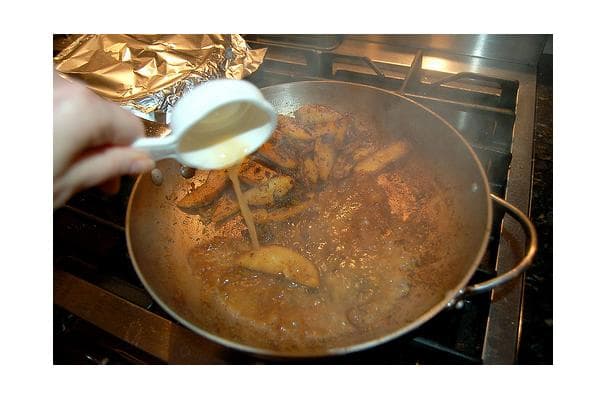
Pre-Ferment is a partial mixture of flour, yeast and water from the main dough recipe that has been set aside to develop flavor through fermentation. The two basic types of pre-ferments are yeast pre-ferments and sourdough pre-ferments.
We use cookies to enhance your browsing experience, serve personalized content, and analyze our traffic. By clicking "Accept All", you consent to our use of cookies.
184 techniques

Pre-Ferment is a partial mixture of flour, yeast and water from the main dough recipe that has been set aside to develop flavor through fermentation. The two basic types of pre-ferments are yeast pre-ferments and sourdough pre-ferments.
A cutting technique used to chop food into very fine pieces. To mince, first, cut food into thin slices. If the food is thick, topple the slices over on its side and cut it into thin strips. Turn 90 degrees, cut fine dices across the strips. Some chefs prefer to use two knives and perform drum rolls on the cutting board until the food has been chopped into small pieces.

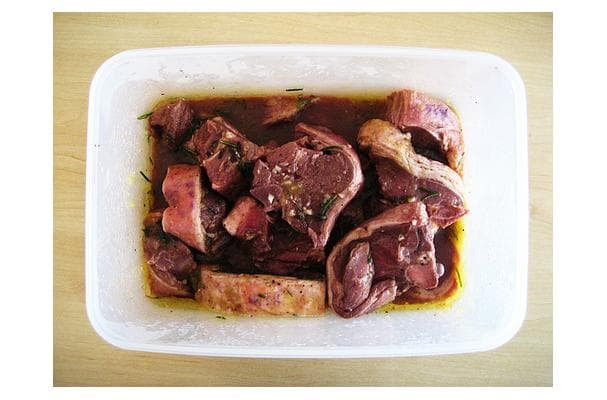
The process of soaking food (such as meat, fish, poultry, or vegetables) in seasoned, often acidic, liquid before cooking.

Infusing milk or cream adds a wonderful flavor to your dessert. The flavors of the herb or spice is captured in the milk or cream, giving it a lovely aromatic essence. Simply bring the milk or cream to a boil, add whole herb leaves or sprigs, and steep the mixture for 30 minutes, covered and off the heat. Pass it through a strainer and chill. Any type of milk - skim milk, low-fat milk, whole milk, half-and-half, light cream, heavy cream, or a combination of these - may be used but the higher the fat content, the more herbal flavor will be captured. Store in a covered container in the refrigerator up to the product's expiration date. Best used within 3 days when the flavor is strongest.
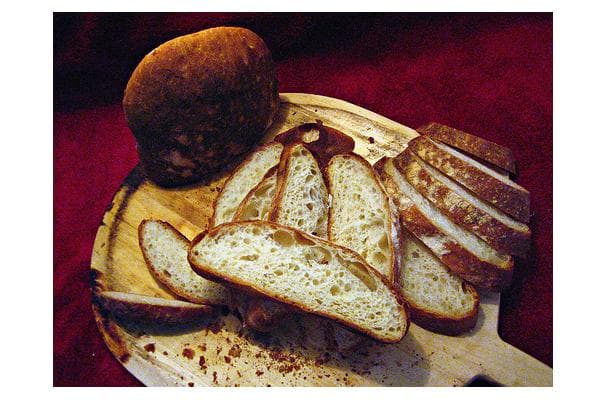
To restore a food to edibility. Often refers to soaking salt cod in fresh water to rehydrate and prepare for cooking.

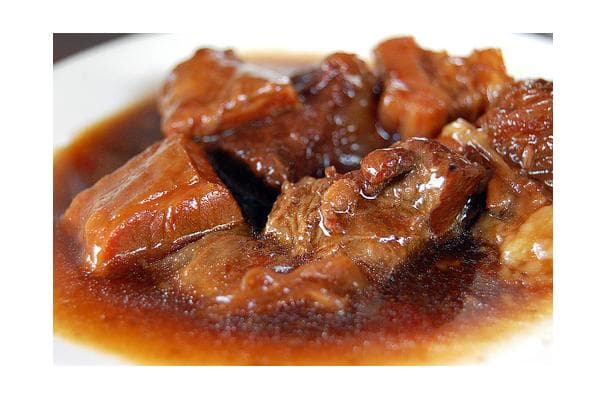
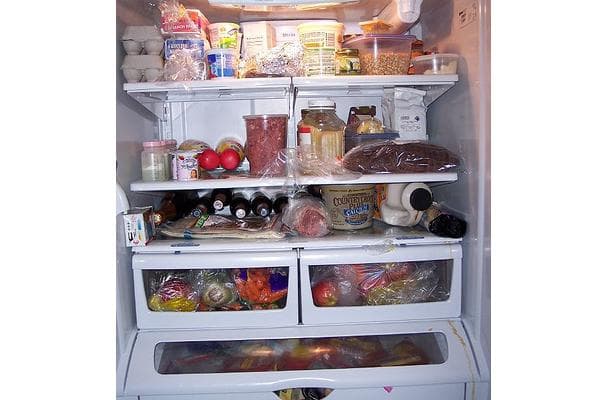
Why is there such a mystery when it comes to cooking with wine? Recently I was asked if I used expensive wine to make my favorite recipes that call for wine like beef bourguinon or coq au vin. Without hestitation, I replied "no, I use the least expensive or leftover wine." Many articles have been written with completely opposing views. Some say "never cook with a wine you wouldn't serve with that dish," others say "it doesn't matter what you cook with". A recent taste test showed that the price of the wine didn't make a difference in the taste of the final dish - except that if you used expensive wine you were more likely to use less to have the wine to drink with the meal. So don't feel guilty if you reach for a bargain - or leftover wine in the frig - to add to your pot. I like to slow cook or reduce the wine in any dish that I'm cooking - bring the pot to a boil on the stove, close the lid and then put the pot into a hot oven for at least 1.5- 2 hours. The wine - and usually I pour it in to cover whatever is cooking - acts to soften and braise the meat or chicken - and the alcohol is completely burned off. These dishes are best prepared the day before and gently reheated.

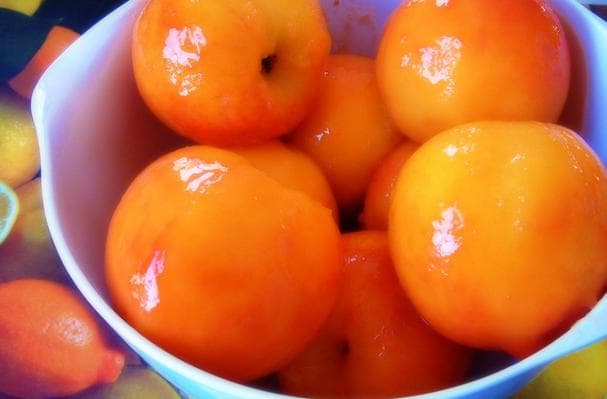
DEFINITION: Partial cooking of food by plunging in boiling water for a short period and then rapidly cooling in cold water or an ice bath for a short time to stop the cooking (known as shocking). USES: (1) Blanching is used to prevent green vegetables, such as broccoli and spinach, from oxidizing and to maintain their bright green color. It also keeps vegetables crisp and tender. (2) It can be used to loosen fruit or vegetable skins to make peeling easier. Blanching can also be done to remove the skins from certain nuts like peanuts (technically a legume) and almonds.

A hot water bath is used when something needs to be cooked gently. Often used for melting chocolates, or making emulsified butter sauces (see bain-marie). This can be executed by setting a bowl over a pot of simmering water. A ice water bath is used to chill food rapidly. It should be composed of a minimum of 50%% ice.

A technique to mix cookie dough that calls for whipping the egg and sugar to foam first before combining it with the rest of the ingredients. To make cookie dough using the sponge method: 1. Measure out ingredients and have them at room temperature. 2. Whip the eggs and sugar to proper stage. 3. Fold in remaining ingredients, take care not to overmix.
To quickly stop the cooking process of blanched items by plunging them in ice water.
A cooking technique used to coat food with a dry ingredient prior to cooking. It involves rolling the food in a wet preparation (e.g. egg), then rolling it in a dry ingredient (e.g. flour). This process is typical in the making of breaded foods, such as fried fish.

Method of making sausage where meats (often pork, lamb, veal, or chicken) and vegetables are minced or chopped, wrapped in caul fat and then pan roasted or fried. A crepinette is usually flat and round, but some are shaped into balls.. Sometimes truffles are incorporated.

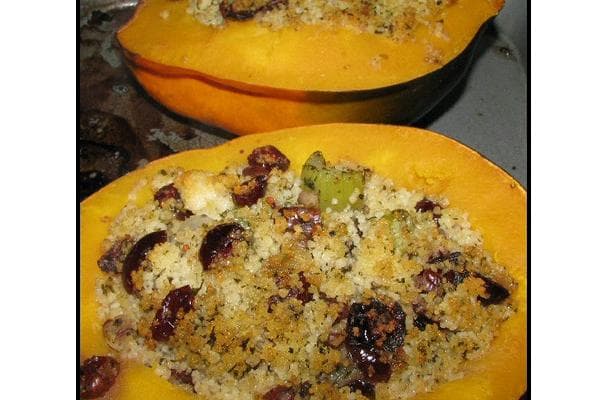
Stuffing is a variety of ingredients that is used to stuff meat and poultry prior to cooking.

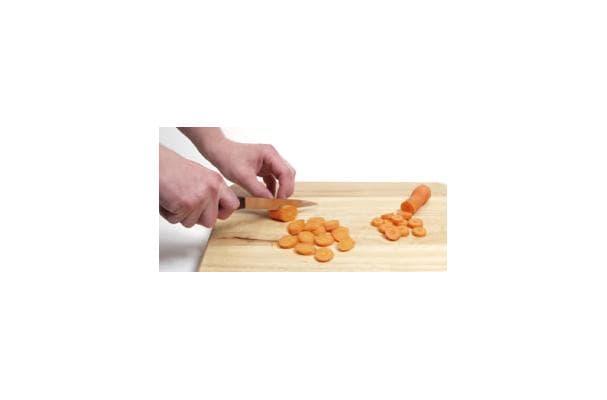
Rondelle cutting is to cut something into a circular shape. It is basically cutting a round food into round slices. For example, cutting a carrot crosswise (90 degrees) so you end up with round carrot slices is rondelle cutting. Used for carrot coins and other round foods like zucchini and summer squash. Related to both the bias and chip cuts.

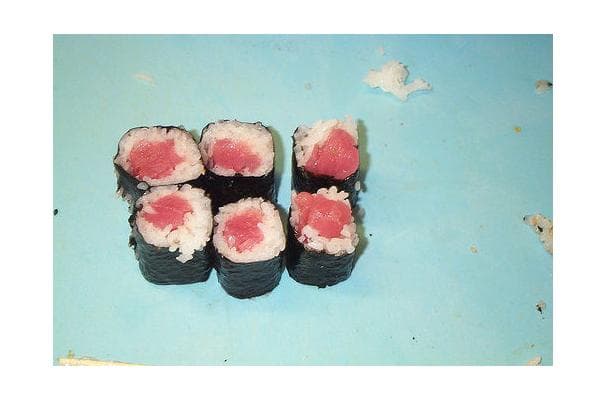
Roll cutting involves slicing a filled roll into several bite-sized pieces to make the roll easier to eat. An example is sushi roll, which is sliced first before serving.

Pressing tofu dispels some of the water, making the texture firmer and chewier. Often used to make tofu more reminiscent of a meaty texture. How To: Wrap a block of tofu in a clean dishtowel and place on a plate or cutting board. Place a couple of cookbooks or flat, heavy objects (you might want to put a layer of plastic wrap between the two as the dishtowel will become soaked) on the tofu and let rest for 10 minutes. Unwrap the tofu and prepare. Another great thing you can do with tofu is to freeze it. Just place it in the freezer in its original packaging. When you're ready to use it, take it out and defrost. Pressing it becomes even simpler, I've even just given it a squeeze over the sink, and it doesn't fall apart (like regular not frozen/defrosted tofu). The texture becomes even more firm and chewy than with regular pressing alone, and it absorbs marinades wonderfully!

The removal of skin or peel of a fruit or vegetable using a short bladed knife or special peeling tool.

The last step in the dough manipulation process to give it its final shape before baking. Proper shaping expels all gas bubbles from the dough so that there are no large air pockets in the baked product. For pan breads and hearth breads, the dough is usually shaped so that the seam is centered on the bottom to avoid splitting during the baking process.

Heating is the process by which food is cooked and can be achieved by using a stove, an oven, a grill, or a microwave (among others).
This technique brings the fish innards through the fish mouth. Best used for smaller and the freshest fish, leaving the body intact. Insert 1 chopstick (throw-away pine) through the mouth and beyond the gill. Insert the second chopstick, grasp both twist 2-3 times, catching the innards around them. Pull, extracting the innards with the gills.
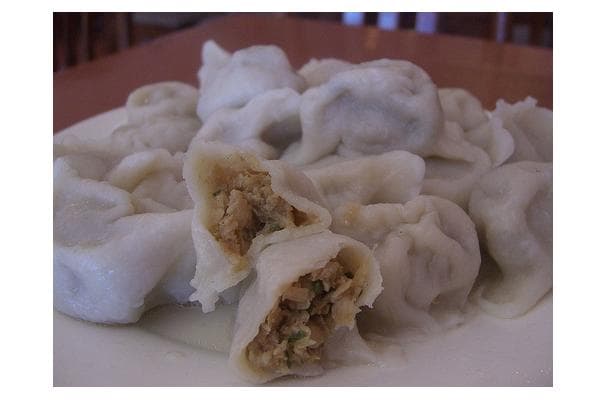
A philosophy and practice of running the kitchen so that nothing is wasted. Dumplings, charcuterie, rilletes, pates, and sausages all stem from this philosophy as ways of making use of "scraps".

Tasting in culinary terms is to sample food; taking a small amount to "taste" and test for quality.


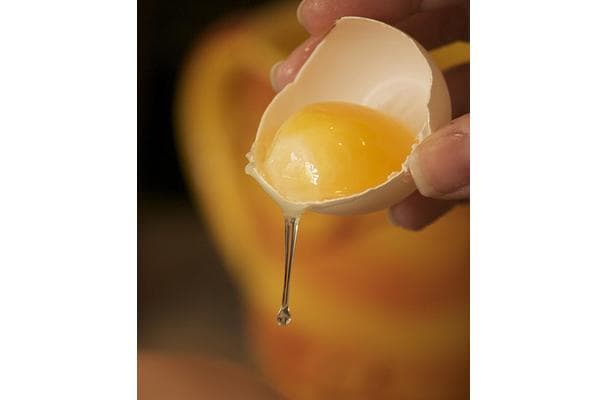
The yolk and white of the egg are separated from each other either by being passed from one half of the shell to the other and allowing the white to slide off the yolk, or by allowing the white to drip through the fingers while holding the yolk in the hand.


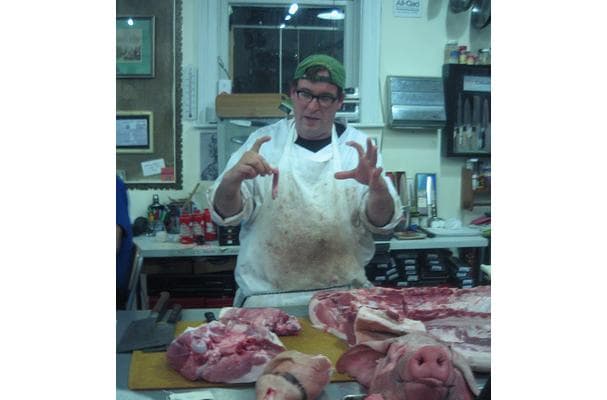
Butchering is a process used to prepare animal carcasses into various cuts for cooking. The animal is first slaughtered and the head removed. The animal carcass is then hung up, allowing for easy access. The skin and gut are removed and then various sections of the animal are dissected and kept or discarded.

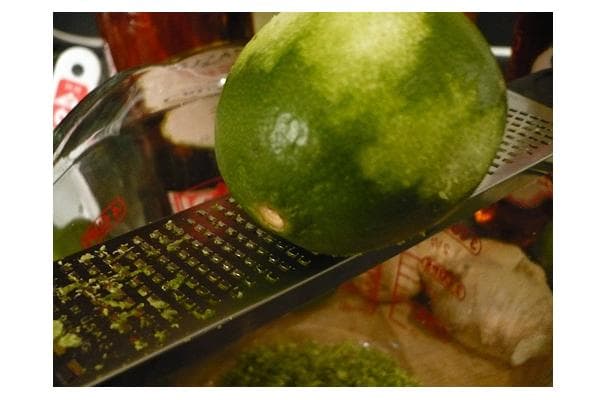
The process of extracting zest (the essential oil-filled, colored part of the skin) from a citrus fruit. To zest, scrape the fruit against the finest portion of a grater, steadily turning the fruit as you grate to avoid including any of the bitter white part of the rind which lies below the zest.
Skimming is the removal of the floating layer of fat or impurity from the top of a liquid. This can be done using a spoon, or a skimmer.

The final rising in making yeast dough products before baking. Bakers often take great care to control the humidity and temperature of the proofing process to ensure good flavor development in the dough. Proofing can also refer to the technique of mixing yeast with water and sugar to check if the yeast is alive. To proof yeast, dissolve yeast with indicated amount of warm water. The water should be between 110-115 degrees Fahrenheit. Stir in indicated amount of sugar and let the mixture set in a warm place for approximately 10 minutes. Yeast is proofed once the mixture is bubbly. As a general rule, if the yeast is within the experation date labeled on the package, there is no need to proof the yeast before using.

French roast is a method of preparing coffee where the beans are heated to a high temperature for a relatively long time. This leads to a darker and stronger flavored coffee.
The purpose of whipping cream is to incorporate air into cream to give it structure. Often used for dessert toppings. To make whipping cream like a pro: 1. Make sure the cream is at least 1 day old. 2. Thoroughly chill the cream and equipment. 3. Using a whisk or whisk attachment (if using a machine), whip at medium speed. 4. Sift in sweetener slowly (if using) as you whip. 5. Stop whipping when the cream forms a peak that holds shape. Over-whipping will cause the cream to collapse. 6. Keep the cream slightly under-whipped if incorporating into other ingredients. 7. Fold in flavoring after the cream is whipped.

Muddling is the technique of smashing to extract the essence of an ingredient. Use a muddler (think small baseball bat) or if you lack one, the sturdy handle of a wooden spoon, ladle, or even a spatula would work.

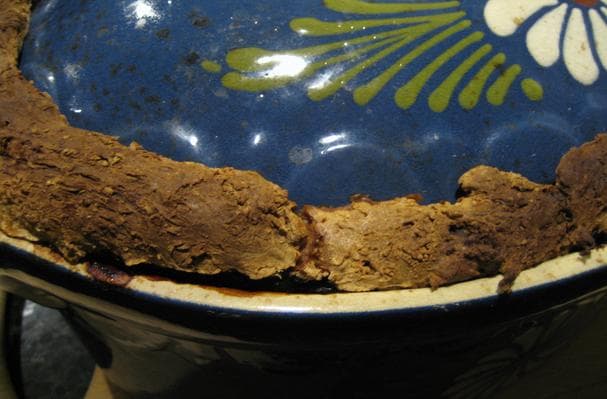
Use of pastry to cement the top of a dutch oven or casserole when baking a stew or pot roast, typically of meats. Create a simple mixture of flour and water and press it all around the edges where the pot and lid meet to create a seal. Wash the luting paste with a mixture of the white of one egg with 2 tablespoons of water, this will give it a nice golden sheen for presentation. Luting will keep the liquid inside the pot increasing moistness of the food and makes for a dramatic presentation when you crack it off the pot before serving. Luting is commonly done with Baeckoffe, an Alsatian oven baked stew. A band of heavy aluminum foil can be used as well.

Adding a flavoring agent just before serving. This is common with some oils, salts, herbs, spices and sauces. If finishing elements are added too early their flavors and texture become muted and subdued. A classic example of finishing is to add a bit of fruity extra virgin olive oil to a pasta sauce just before serving. The heat releases the flavors making them bright and allows the diner to smell the aromas.

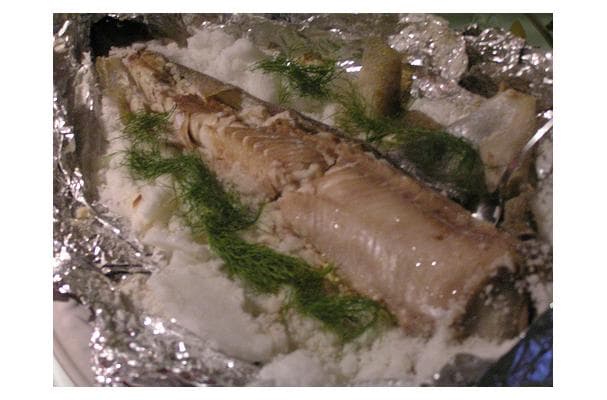
This technique is primarily done with fish, but can also be done with vegetables and other meats. The food is first covered with leaves and then a thick layer of salt, and baked in the oven. The salt seals in the moisture resulting in perfectly cooked, flavorful food.

The technique of securing glass bottles around pear buds so that the pears will grow inside the bottle. This technique is used when making pear brandy.

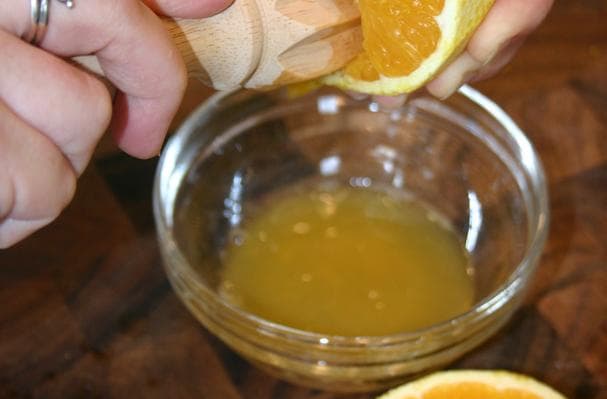
To extract the juice of fresh citrus fruits using a reamer. Slice a citrus fruit in half and use a reamer, a hand-held juicer tool, to penetrate the fruit. Twist the reamer to release as much juice as possible.
Combining ingredients, typically using a motorized mechanical device with blades to chop and integrate different foods.

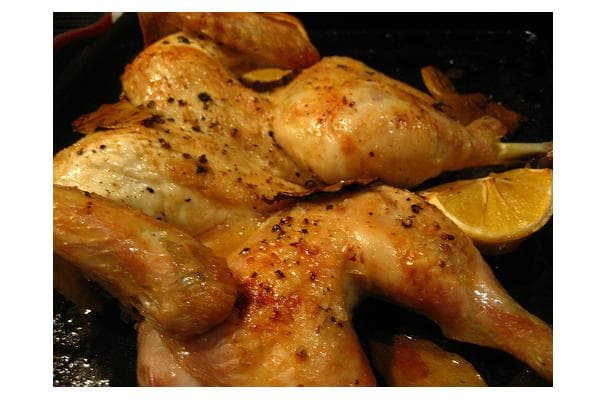
Spatchcocking is to split the chicken down the backbone and flatten it out. Some also refer to it as a "butterflied chicken". The name could be an abbreviation of "dispatch the cock" according to Alan Davidson, Oxford Companion to Food. He speculates that this technique originated in Ireland based on 18th century Irish cookbooks.

To remove the outer layer of something, usually with a knife or vegetable peeler.
Practice of using aromatic herbs and spices to increase or improve the fragrance profile of a food. The term is often used when the scent/flavor in a dish is faint. Rosemary, lavender, jasmine, and cumin are all popular for perfuming dishes.

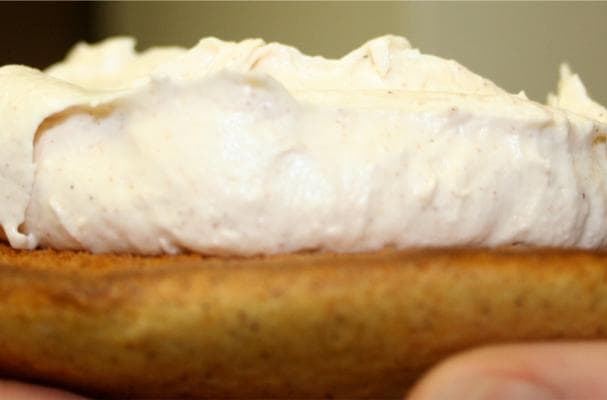
The process of applying a sweet coating to cakes and other baked goods. This method is used to improve the appearance, and keeping qualities of the cake or baked good by forming a protective coating around it. Icing or Frosting is also a way of adding flavor and richness to cakes and baked goods. For best results, first remove any crumbs with your hand or a pastry brush. Put a few strips of waxed paper around the outside of the cake to keep the plate clean of icing. Spread about 1/2 cup of icing on the top of the bottom layer. Next, put the second layer on top of the first and evenly spread a thin layer of icing around the sides of the cake; this will hold in any remaining crumbs and is called a crumb coat. Chill the cake for 15 to 20 minutes to set the crumb coat. Then, add a second, thicker layer of icing around the sides. Finally, add the remaining icing to the top and spread evenly, blending the edges. Remove the waxed paper and allow to sit for one hour before serving, if time permits.


Scaling is used to alter the amount food prepared by adjusting the amount of each ingredient used so that the proportions stay constant. To adjust the amount of each ingredient, multiply its quantity by the conversion factor. You can obtain the conversion factor by diving the desired serving(s) by the original serving(s).
A topping may refer to any flavorful addition to a dish, this is achieved by sprinkling or placing food/ ingredients on top of another.

Chemical process responsible for enhancing flavors when toasting, roasting, and browning foods. Named for Louis-Camille Maillard , the French chemist who first described it early in the 20th century.
A cutting technique used to produce very fine slices or strips of food. See "Slicing".
A method used to incorporate sugar into butter while aerating the mixture. Often used in making cakes and cookies To cream butter and sugar, place butter (at room temperature) in a mixing bowl and beat slowly until smooth and creamy - this makes the butter more receptive to the addition of sugar. Add the sugar slowly into the butter while beating on medium speed. It is assumed in most scenarios that you beat until the mixture is light and fluffly although some recipes may call for less aeration in the butter-sugar mixture.

Culturing is a technique in which form of food is changed by adding and processing yeast. Culturing can also be achieved naturally by the addition of lactobacillus bacteria and the use of traditional culturing processes. Food, such as vegetables is pounded to break some of the cell walls. Salt, spices and liquid whey are added to make the culture and the food is canned and allowed to sit at room temperature for 2-3 days until bubbles form. The food is then refrigerated. This was a traditional form of food preservation before refrigeration, and cans were stored in root cellars to keep cool. Kim Chi and Sauerkraut are two traditional cultured vegetable recipes.